
Agri Business Review Magazine

Agricultural Crop Protection and Agrochemical Distributors

Agricultural crop protection and agrochemical distributors provide growers, cooperatives and agribusinesses with pesticides, herbicides, fungicides, fertilizers and related crop input products. With a focus on product availability, regulatory compliance, field support and supply reliability, they support healthier crops, improved yields and more efficient farm operations.

AMVAC Latam: Enhancing Crop Outcomes Through Integrated Field Solutions
AMVAC Latam
Enhancing Crop Outcomes Through Integrated Field Solutions
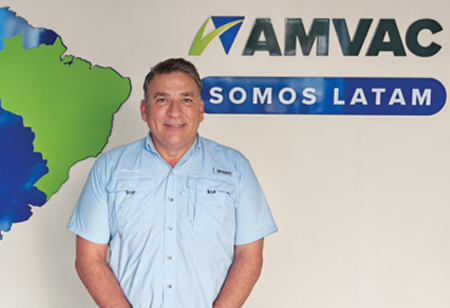
Max Martinez, Commercial Director
Crop protection and plant health solutions often fall short when they are removed from field realities. AMVAC Latam anchors its approach at the farm gate, where crop challenges are defined by actual growing conditions. Working closely with growers, it develops crop protection and plant health solutions based on these on-ground requirements. This direct engagement also shapes how these solutions are applied in the field, combining technical expertise with field insight to drive consistent results.

Agrochemical Services: Crop Protection Distribution across Latin America

Agricultural crop protection and agrochemical distributors in Latin America function as critical intermediaries between manufacturers and the region’s diverse farming communities, ensuring that essential inputs reach fields where they directly influence productivity and crop health. Their role extends beyond logistics, encompassing technical guidance, inventory planning, and localized knowledge of crop cycles, pest pressures, and climatic conditions. Given the scale and diversity of agriculture across the region, distribution networks must adapt to varying crop types, farm sizes, and geographic challenges, from large-scale commercial operations to smaller, fragmented holdings.

Aligning Crop Protection Distribution with Field-Level Reality

Agricultural executives evaluating crop protection and agrochemical distribution partners face a persistent tension between product availability and real-world effectiveness. Inputs alone rarely determine outcomes. What matters is, how well those inputs are adapted to field conditions, how consistently they perform across seasons and how effectively they are supported through technical guidance. Many distributors still operate as transactional intermediaries, prioritizing volume over agronomic alignment, which leaves growers navigating variability without sufficient support.

The Role of Bio-specialties in Sustainable Agriculture
Grupo AJE
The Role of Bio-specialties in Sustainable Agriculture
Armando Russi, Head of Sustainability, Comms & Public Affairs

Armando Russi, Head of Sustainability, Communications & Public Affairs at AJE Group and Executive President of the International Chamber of Climate Business (CINC), is a Chemical Engineer and Master of Environmental Management. Honing expertise in sustainability and ESG management in consumer goods, he specializes in specialty bioeconomy, decarbonization, and productive value chains. 

Agricultural Crop Protection and Agrochemical Distributors FAQ

Q1
What Do Top Agricultural Crop Protection and Agrochemical Distributors in Latin America Do for Growers and Channel Partners?
They connect crop inputs with the field advice, product access and regional coordination needed to use them well. Top Agricultural Crop Protection and Agrochemical Distributors in Latin America typically work across herbicides, insecticides, fungicides, seed treatments, plant health products and related agronomic support. Their role is not only to move inventory. It is to help growers and dealer networks match products to crop pressure, climate, timing, application method and regulatory expectations.
Q2
What Services Are Included in Agricultural Crop Protection and Agrochemical Distribution?
Agricultural crop protection distributors often combine sourcing, warehousing, technical training, field recommendations, logistics planning and distributor support. Agrochemical distribution services may also include product stewardship, label guidance, residue awareness, safe handling education and seasonal availability planning. Buyers evaluating Top Agricultural Crop Protection and Agrochemical Distributors in Latin America should test how a distributor responds when a pest outbreak compresses delivery windows and field teams need fast technical direction.
Q3
Why Is Demand Growing for Crop Protection and Agrochemical Distribution in Latin America?
Latin American agriculture faces intense pressure to protect yield while managing input cost, resistance, climate variability and sustainability expectations. Demand is rising because farms need dependable access to crop protection solutions, not just more product choices. Top Agricultural Crop Protection and Agrochemical Distributors in Latin America matter when supply timing, crop cycles and local pest dynamics leave little room for guesswork. A delayed treatment can affect an entire harvest window.
Q4
How Are Leading Crop Protection and Agrochemical Distributors Selected?
Strong evaluation looks at product breadth, supplier discipline, field knowledge, logistics reliability, regulatory care and support for local partners. Selection should also examine how recommendations are validated before reaching growers. When comparing Top Agricultural Crop Protection and Agrochemical Distributors in Latin America, decision-makers can review a real crop scenario, such as a disease pressure spike during rainy conditions, then ask how the distributor coordinates product choice, stock availability, application guidance and follow-up.
Q5
What Business Value Do Agrochemical Distribution Services Create?
Reliable agrochemical distribution services reduce missed applications, excess inventory, unsafe handling and costly product mismatches. For growers, the value appears in healthier crops, clearer treatment plans and better use of equipment, water and labor. For channel partners, Top Agricultural Crop Protection and Agrochemical Distributors in Latin America can improve seasonal planning, training quality and customer confidence. The category also helps limit risk when changing regulations or resistance patterns affect product selection.
Q6
What Role Do Innovation and Technical Expertise Play in Crop Protection Distribution?
Innovation in crop protection distribution is increasingly practical: better formulation compatibility, biological and conventional product integration, digital field records, precision application guidance and stronger stewardship programs. Technical expertise gives those tools context. Top Agricultural Crop Protection and Agrochemical Distributors in Latin America must understand how soil, crop stage, pest pressure, weather and application equipment interact before recommending a solution. Technology helps, but field judgment still decides whether it works.