Agriculture in Latin America no longer runs on historical averages. Farmers across the region are making decisions in a world where rainfall patterns shift unexpectedly, drought cycles intensify and growing seasons become increasingly difficult to predict.
Under such conditions, farmers' livelihoods rely not on achieving the best possible yields in optimal conditions, but on continuing to achieve the best possible yields in sub-optimal conditions.
That shift is redefining the role of agricultural technology. Growers are looking beyond individual products and evaluating how effectively entire systems help them manage risk, protect productivity, and preserve soil health over time. Climate resilience has become an operational requirement rather than a sustainability aspiration.
Bioceres Crop Solutions recognized this transition early. Established in Argentina and molded by a long history of farming in what’s become the world's most weather-vulnerable agriculture region, Bioceres has structured its business model around a single premise. How can farmers produce more reliably in increasingly unpredictable conditions?
Its answer is an integrated platform that combines seed genetics, biological inputs, crop nutrition technologies and digital agronomy tools into a cohesive approach designed for long-term resilience.
From Seed Trait to Farming System
Bioceres Crop Solutions develops and commercializes agricultural technologies that help growers improve productivity while adapting to environmental stress. Rather than focusing on a single input, the company brings together complementary technologies that work across the farming cycle.
At the center of its portfolio is HB4, a proprietary drought-tolerance trait developed from sunflower genetics. The technology enables wheat and soybean crops to maintain stronger performance under water-limited conditions by enhancing plants' natural response to drought stress.
For growers, the benefit of drought tolerance does not simply reside in protecting the crop during dry periods. Improved drought tolerance has benefits for planning, production risk and a more certain result in areas where climate variations are impacting profitability more significantly.
However, Bioceres does not market HB4 as a singular entity, integrating it with its biological products and agronomic services to maximize crop performance across field conditions.
Its portfolio includes microbial inoculants, biological crop protection products and crop nutrition solutions developed through businesses such as Rizobacter and Pro Farm. These technologies support nutrient efficiency, promote soil health and help farmers reduce dependence on conventional chemical inputs.
Digital agronomy capabilities further strengthen the model by enabling growers to make more informed decisions based on local conditions and field-level data.
The result is an ecosystem approach that connects genetics, biology and agronomic expertise. Instead of asking farmers to adopt individual products independently, Bioceres creates a framework in which technologies reinforce one another across the production cycle.
Scaling Innovation through Partnerships and Regional Insight
In agriculture, scientific breakthroughs matter only when they can be deployed at scale. In order to effectively move new scientific discovery from laboratory to the field, there should be an ability to translate it effectively into practice through regulation and credibility within the value chain.
The company works closely with seed producers, distributors, research institutions, growers networks in order to fast-track the adoption and validation of technology in many growing environments. This strategy has been particularly crucial to the adoption of HB4.
After the first market launch in Argentina, the approval for the commercialization in Brazil and by the USDA for commercial planting in 2024 were gained. The completion of the food and feed safety review by the FDA can open up for even more markets.
In 2025, Bioceres reinforced its strategy for North America through a partnership with the Colorado Wheat Research Foundation to further research and develop HB4 wheat in a relevant growing environment. The milestones listed are more than simply regulatory steps. They showcase the company's ability to connect scientific innovation to market needs, supply chain constraints and regional agriculture.
Operating from Latin America provides direct exposure to some of the world's most demanding agricultural environments. Across regions, farmers have a constant struggle to meet the pressures of drought, volatile input prices and to improve environmental results while continuing to be efficient.
Delivering Measurable Outcomes in Climate-Stressed Agriculture
The effectiveness of climate-resilient technologies is ultimately measured in the field. HB4 wheat yield increases observed during regulatory evaluations averaged for drought conditions and more pronounced for those years with severe water stress.
For growers, there are implications above and beyond just productivity. A more stable yield may contribute to a more predictable revenue and lessen the economic risk associated with increasingly unpredictable weather.
This innovation is also consistent with the general increase of regenerative agricultural practices in Latin America. Bioceres mentioned the potential of HB4 soybean-wheat cropping rotations in no-till systems-that improve soil quality and enhance the carbon sequestration potential as opposed to conventional cropping systems.
Simultaneously, the company's biology-based solutions improve nutrient utilization and efforts to decrease environmental impact without negatively affecting agronomic performance. This combined approach to resilience and efficiency will prove more significant as the food sector, policy-makers and supply chains look for alternatives to improve food production and meet sustainability targets.
The opportunity extends well beyond Latin America. Many of the world's most important crop-growing regions face increasing drought risk, and there is market demand for technology solutions to enhance adaptation with minimal changes in the farming system.
Bioceres enters this moment with a distinct advantage. Its technologies were developed in regions where climate stress is not a future challenge but a longstanding reality. That process has determined a business model which is pragmatic in design, scientific in approach and based on collaboration in execution.
As farming evolves into a more adaptable production paradigm, firms capable of demonstrating innovation in real field outcomes will lead the industry's future.
Bioceres Crop Solutions has demonstrated an ability to do precisely that by combining advanced genetics, biological technologies and regional expertise into a scalable platform for climate adaptation.
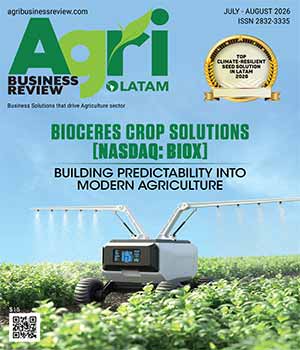
Its recognition as the Top Climate-Resilient Seed Solution in LATAM 2026 reflects years of focused execution and a consistent commitment to helping growers navigate an increasingly uncertain agricultural landscape while strengthening long-term food security.


![Bioceres Crop Solutions [NASDAQ: BIOX]](/company_logos/9-7psbk.jpg "Bioceres Crop Solutions [NASDAQ: BIOX]")
