Thank you for Subscribing to Agri Business Review Weekly Brief
A featured contribution from Leadership Perspectives, a curated forum for agribusiness leaders across the agricultural value chain, nominated by our subscribers and vetted by the Agri Business Review Editorial Board.

SEGES Innovation
Bringing Precision Farming Techniques to Agriculture
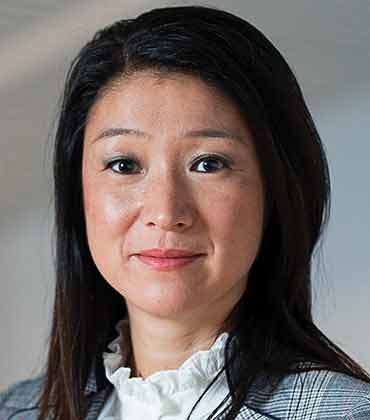
Lisbeth Henricksen
Lisbeth Henricksen is the Executive Director of Innovation at SEGES Innovation, Denmark’s leading agricultural knowledge and innovation centre. Drawing on her decades of experience, Henricksen is responsible for developing and innovating new tools and products for farmers within all areas of primary production. Her drive for mastery and expertise helps her organisation to build bridges between research and practical farming while building new and developing existing partnerships together with academia, companies, and other relevant partners.
In an interview with Agri Business Review Europe, Lisbeth Henricksen sheds light on some of the current challenges prevailing in farming and food production and how organisations can convert these challenges into opportunities.
What, according to you, are the most critical steps taken by your organisation in developing precision farming technologies?
We are an independent knowledge and innovation institution in Denmark. We have a very privileged place in the knowledge value chain, which means we sit between academia and practice. We are researchers who perform detailed studies with complete statistical analysis. Based on the research, we develop management strategies and tools for farmers, which they can implement in farming to drive better outcomes. We have about 500 people involved in all aspects of farming and in food production, but primarily farming.
At SEGES Innovation, we collect extensive data from agrarian and environmental technologies to improve farm management and financial results. We have technical and digital knowledge in-house, which helps us build digital products and data-driven management strategies for our farmers. We have a unique combination of technical and data expertise, and that’s why we are at the forefront when it comes to developing precision farming products.
We have two separate databases for livestock and crops. About 90 percent of all the hectares of farms are registered in our database, and we are receiving real-time data from the farms. We link farmers to the latest digital technologies that improve performance and reduce waste and environmental footprint.
Over the past decades in Denmark, nitrogen leaching has been a major problem in crop production. Leaching of nitrogen can lead to serious environmental and economic damage. As a result, extensive research is being conducted to reduce nitrogen leaching and its impact. We have developed a precision technology, which is approved as one of the nitrogen-reducing strategies for Danish farmers, to reduce nitrogen leaching.
ESGreen Tool is a climate tool we have developed. It pulls in data from the farms, and based on each farm’s data, the tool provides farmers with an accurate calculation of their climate footprint
When it comes to our dairy database or dairy management system, we have all dairy cows registered and updated on the database. It is one of the most comprehensive management systems for dairy, cattle, and beef. The system collects data on health and medical treatments, which we use to focus on reducing the usage of antibiotics. Using our prescriptive strategies, farmers can proactively identify cows with lameness problems and treat them at the earliest. By reducing the usage of antibiotics or other medicines, we can ensure the improvement in animal welfare. The more we can empower our farmers to make quick decisions, the more proactive they will be in managing animal health.
Could you throw light on some of the methods and technologies your organisation has innovated to mitigate the challenges of today’s farmers?
We focus on our database ecosystem and the databases with our partners. We also use artificial intelligence-powered tools that give farmers the insights to make the right decisions and optimise production.
ESGreen Tool is a climate tool we have developed. It pulls in data from the farms, and based on each farm’s data, the tool provides farmers with an accurate calculation of their climate footprint. We are the first in the world to develop a climate tool based on specific farm data. We are currently developing different functions of the tool so that it can also help our farmers in simulating future scenarios.
What would be your advice to your peers and budding professionals to better position themselves in the market?
Quality of crops and profitability can be improved only if you can get more real-time data from farms. We must respect farmers who share data because it belongs to them. It is very important to securely use and share the data for the development of precision farming technologies.
All in all, we are dedicated to improving farming and animal welfare and making production more efficient. Balanced resource planning is also essential for an organisation to offer better strategies. We should always remember why we are doing what we are doing and focus on reducing environmental and climate impacts.
The articles from these contributors are based on their personal expertise and viewpoints, and do not necessarily reflect the opinions of their employers or affiliated organizations.
