Thank you for Subscribing to Agri Business Review Weekly Brief
How do autonomous technologies and data collection help farmers? Autonomous technologies such as drones, robots, and sensors can help farmers collect real-time data about their crops and soil health. Farmers can use this data to optimize crop yields, improve water management, and reduce fertilizer and pesticide use. Land operators or business owners can also benefit from keeping up with the latest technology available in agricultural farm equipment.
The Benefits of Technology in Agriculture
Over the last few decades, technology has dramatically improved the agricultural industry, allowing for more precision and less guesswork. Farmers and ranchers value technology because it increases productivity, reduces water and fertilizer use, reduces chemical runoff, and increases safety. The use of technology in agriculture is regarded as a best practice today for boosting productivity and agricultural production.
Emerging Agriculture Technologies
Technology advances and new tools create opportunities for agriculture. Below are some latest technologies in agriculture farm equipment that are becoming more popular in the ag industry.
IoT and Smart Farming Equipment
In 2050, there will be 9.7 billion people in the world, which means global agriculture will grow 69 percent from 2010 to 2050, according to Business Insider. The Internet of Things (IoT) is a way of monitoring each action in the farming process using sensors and smart farming equipment connected to a wireless network. Data is collected that will give insights into efficiency and productivity. It's easy to make changes when the sensors send the updated information. Knowing when crops need water or nutrients, for example, would help farmers boost their yields. Farming technology like this helps the industry meet growing demand, but it's not without risk. Farmers should use strong passwords, keep their personal and business networks separate, and consider using a virtual private network (VPN).
Technological advances have made the agricultural industry more efficient and precise.
Geographic Information Systems (GIS)
Farm machinery can be monitored with sensors, just like smart technology in the field. A Geographic Information System (GIS) is an approach that uses GPS and sensors on tractors and other equipment. Autosteer technology, yield mapping, and harvest documentation are some types of sensors. Sensors also monitor the tractor's health and when it needs to be serviced. With these new farming technologies, farmers can maximize yields and use their machinery more efficiently.
Automated farm equipment and robotics
Agriculture operations can benefit from automation by having machines that can do jobs faster and more efficiently. Higher crop yields come from completing labor-intensive tasks faster. Using automated rate applications for fertilizer and pesticides after soil sampling would help. This technology is new but growing fast and has many opportunities. Companies are making leaps in agricultural robotics, from Agrobot's technology that gently picks strawberries to American Robotics' autonomous drones for monitoring crops.
Data analytics and machine learning
Machines can collect and interpret data to learn and predict which traits and genes work best. Farmers worldwide can use this to find the right breed for their climate and location. Farmers can also use machine learning algorithms to sell stuff. Algorithms can tell them which products are selling well and which aren't. This would help with future farming forecasts.
Drones in Farming
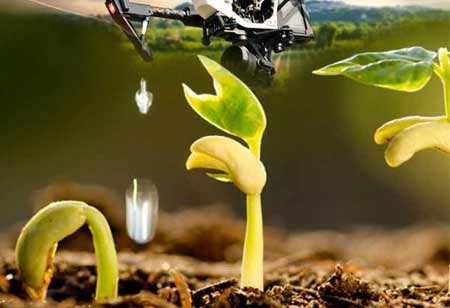
Drones are a great way to cover a lot of ground quickly. The devices can monitor crops or livestock, map or survey land, and distribute chemicals evenly. Ag drones can be programmed to work where farmers want them, while some are manually operated. They can easily see spaces on their land that may be hard to reach with drones because they capture high-resolution images and video. Natural disasters like flooding make this especially helpful.
Today, with smart technology and farming, investing in equipment is more important than ever. Farmers can minimize risk and protect their assets with farm equipment coverage.

However, if you would like to share the information in this article, you may use the link below:
