Thank you for Subscribing to Agri Business Review Weekly Brief
A featured contribution from Leadership Perspectives, a curated forum for agribusiness leaders across the agricultural value chain, nominated by our subscribers and vetted by the Agri Business Review Editorial Board.

Rijk Zwaan
Securing our food future
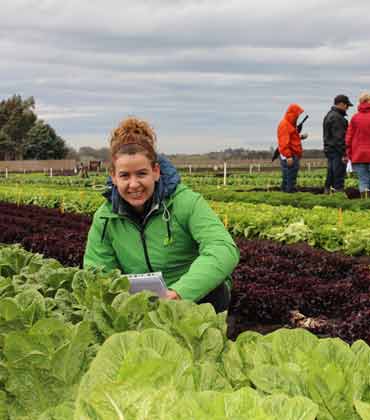
Frances Tolson
Seeds are positioned at the very beginning of the food chain, and their importance is often overlooked. Vegetable breeding informs the characteristics of the varieties we grow and eat and plays a vital role in long-term food security and the environmental sustainability of our food systems.
World-leading vegetable breeding and seed production company, Rijk Zwaan, breeds vegetables to meet the agronomic needs of growers while responding to ever-evolving retail and consumer demand. Increasing the sustainability of agricultural production is of key importance in minimising its negative environmental impacts, plant breeding is the first of many steps that can help us achieve this.
Rijk Zwaan Account Manager, Frances Tolson, explains, “We increase sustainability along the entire chain by spending years, in some cases even decades, drawing what we can from nature to create varieties that not only meet consumer demands in terms of taste, convenience, nutrition, and aesthetics, but can also contribute to sustainable production. This includes resistance breeding, improving yields and reliability, and selecting natural traits that help to reduce food waste. We are also passionate about creating positive behavioural change around vegetable consumption which itself contributes towards a more sustainable world.”
 Rijk Zwaan invests 30 percent of its turnover in Research and Development to create vegetable varieties to help feed the world. Almost 20 years ago, Rijk Zwaan asked lettuce farmers and processors what they needed to sustain their business, the feedback was to reduce waste by improving lettuce shelf life. Oxidation causes pinking on the cut edges of lettuce leaves, these discoloured edges create food waste for processors, retailers and consumers. In 2016, Rijk Zwaan addressed this need, introducing lettuce varieties with the Knox™ trait. Knox™ is a natural trait introduced through selective breeding, which delays oxidation and the discolouration of cut lettuce by several days. A longer shelf-life means less food waste, less landfill, and reduced profit loss along the chain.
Similarly, discovering a naturally darker leaf trait was the catalyst for stronger, more productive cucumber plants. Now coined, Blueleaf®, these commercial cucumber varieties have dark, blue-green foliage that contain more chlorophyll, enabling the plant to absorb more light which converts into more growth and fruiting. The plant is slower to yellow, meaning it remains productive for longer. Blueleaf® varieties are also better able to withstand viruses, fungi such as Fusarium and mildew and pests such as whitefly and thrips. Blueleaf® varieties can decrease the energy and inputs needed to produce a cucumber crop, and the healthier plants reduce the need for chemical sprays.
Recently, Rijk Zwaan launched its first CleanLeaf® eggplant variety, called Kesia RZ. CleanLeaf ® is the brand name for varieties specially bred to have very few trichomes (hairs). The lack of hairs makes Kesia RZ less attractive to whitefly and thrips and reduces the need for spraying. Kesia RZ is a step towards more sustainable crops, without compromising on top-quality fruit.
“The Knox™, Blueleaf®, and Cleanleaf® traits are specially selected for increased sustainability. These are good examples of the way we work with nature by naturally selecting these characteristics from plants in the wild and breeding them into improved varieties using traditional methods,” Frances says.
Breeding for disease resistance is another incredibly important aspect of Rijk Zwaan’s role in the sustainability of our food systems. A recent example is the Tomato Brown Rugose Fruit Virus (ToBRFV), an emerging and rapidly spreading plant virus that has had major impact on global tomato production and distribution. Soon after the discovery of ToBRFV, Rijk Zwaan’s breeders focused on developing resistant varieties. ToBRFV-resistant varieties are now in the market, decreasing the virus’ spread, halting astronomic crop losses, and ensuring global tomato supply.
Vegetable breeding informs the characteristics of the varieties we grow and eat and plays a vital role in long-term food security and the environmental sustainability of our food systems.
The new varieties were extensively tested not only for their disease resistance to ToBRFV resistance but also agronomic value.
Sustainability is not just ecological. Our growers and food producers need to be financially sustainable, and fresh vegetables need to be accessible and affordable for global food security.
Food security, nutrition and sustainable agriculture are intertwined.
“As a vegetable breeding company, we are passionate about vegetables, but we are also passionate about their accessibility and affordability. As well as breeding vegetables, we aim to create long-term behavioural change to increase their consumption,” Frances says.
Frances is an ambassador for Rijk Zwaan’s social initiative, Love My Salad, a platform coordinated by Rijk Zwaan employees together with growers, chefs, bloggers, and health and nutrition experts to promote vegetable consumption worldwide.
Rijk Zwaan Australia also collaborates with non-government organisations, not-for-profits and knowledge institutions to develop and support strategies that increase vegetable consumption, including a recent project with the University of Newcastle, Australia, to develop an online culinary nutrition education course for health professionals, and supports SHIFT Healthy Lunch Kitchen, a social enterprise that is reimagining school lunches in local communities.
“Seed companies like ourselves, as well as growers, are working with social initiatives such as Love My Salad to educate consumers about vegetables,” Frances said.
Frances’ love of vegetables stems from her being connected to vegetables her entire life. She joined Rijk Zwaan in 2012 with the aspiration to bring new vegetables to life.
“Some of my best childhood memories are working on my family’s vegetable farm, eating the freshest watermelons, hiding under cabbage leaves, and discovering nature at its best. In Australia we are fortunate to have an abundance of fresh food right at our fingertips and through my career I have the privilege of bringing new vegetable varieties to life – sharing innovations, new traits, and flavours with supply chain partners,” Frances says.
“One of my favourite contributions has been in the snacking and convenience sector – by developing bite-size snacking vegetables, we help kids get 1 of their 5 a day while helping them make healthier choices over a lifetime.”
With Australia’s population expected to reach 30 million by 2029, it’s now more important than ever that breeding companies are working with the whole chain to develop sustainable vegetable varieties. The adaptability, resistance, and yielding capacity of varieties; alongside cleverly sought traits that reduce negative environmental impacts of production – are driving factors in realising sustainable farming and food systems.
“I love this industry and I get great joy in working with a solid, family-owned company,” Frances says.
“We pride ourselves on creating good, natural food, and contributing to the betterment of Australians by increasing the availability of nutrient-dense fresh food.”
The articles from these contributors are based on their personal expertise and viewpoints, and do not necessarily reflect the opinions of their employers or affiliated organizations.
