Thank you for Subscribing to Agri Business Review Weekly Brief
Agri Business Review: Specials Magazine
![Copeval [COPEVAL:SN]: Engineering Precision in Crop Protection Execution](https://www.agribusinessreviewapac.com/uploaded_images/Untitled-2-Recovered-5oey.jpg "Copeval [COPEVAL:SN]: Engineering Precision in Crop Protection Execution")
Agricultural production across Latin America is being reshaped by the growing importance of execution at the field level. Outcomes are no longer determined solely by input selection. They depend on how precisely and contextually those inputs are applied. Variability in climate, soil conditions and pest pressure has increased the need for better timing and coordination in the field. As a result, growers are focusing on translating agronomic insight into timely action, improving yield consistency and operational reliability across diverse production environments today. This shift is redefining how support systems around the farm are structured. Copeval, a Chile-based agricultural solutions provider offering crop protection inputs, seeds, fertilizers and agronomic services, operates through a model that connects supply with advisory led execution. The focus is on enabling growers to move from decision to application in a way that reflects local conditions while maintaining consistency across production cycles and improving field-level responsiveness under varying environmental pressures. Integrated Supply and Advisory Execution The model is built on integrating input access and agronomic guidance rather than treating them as separate functions. Crop protection products, seeds and fertilizers are made available in coordination with advisory support, allowing growers to align decisions with crop cycles and environmental variables from the outset. Agronomic teams work directly with producers to assess soil conditions, pest pressures and crop requirements, converting field observations into recommendations that reflect local realities and support more accurate application strategies across different stages of crop development. Once decisions are defined, execution becomes the determining factor in performance. Crop protection outcomes depend on timing and method of intervention, so engagement is structured across planting, growth and harvest stages. Each phase is supported through clearly defined agronomic actions that ensure recommendations translate into effective field application. Continuity across these stages is reinforced through reliable input availability, reducing delays that can disrupt crop performance and maintaining alignment between advisory guidance and supply across regions. Operational consistency is sustained through defined processes that guide product handling, delivery and recommendation practices across locations. These structures reduce variability in execution while still allowing flexibility to respond to local conditions. Coordination between logistics and advisory teams ensures that supply decisions reflect field demand rather than standard inventory cycles, strengthening responsiveness and improving efficiency across the production chain while maintaining reliability in how services are delivered to growers.
![COPEVAL [COPEVAL:SN]: Engineering Precision In Crop Protection Execution](https://www.agribusinessreviewapac.com/newstransfer/upload/Crop_Protection_and_Forage_Seeds_Development_Latam-9q4uk-.jpg "COPEVAL [COPEVAL:SN]: Engineering Precision In Crop Protection Execution")
Top Forage Seeds Development Service in Latin America 2026
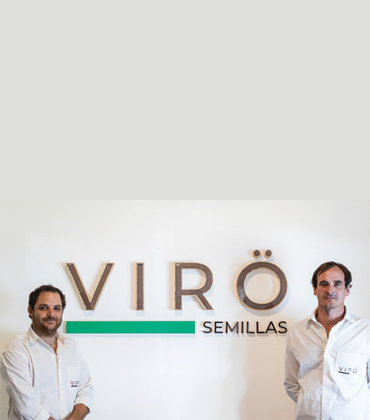
Why does forage performance depend on region-specific genetic selection? VIRÖ Semillas operates with a clear philosophy: there is no single genetic source that is best for every environment. For this reason, the company continuously evaluates forage genetics from diverse origins around the world, selecting those that deliver the greatest value for each specific production situation. Rather than promoting a single breeding program or geographic origin, VIRÖ Semillas focuses on identifying and validating the best-performing materials for defined livestock, dairy and mixed systems. Varieties are selected based on their ability to adapt to real production environments, respond to management conditions and contribute to more stable and efficient pasture systems. “Our objective is to provide producers with the most suitable genetics for their specific conditions, combining global diversity with local understanding to enhance efficiency, sustainability and profitability,” says Miguel, Director of VIRÖ Semillas. A Global Search Guided by Local Reality How are candidate forage varieties evaluated under practical farming conditions? The company’s process begins with the evaluation of genetic material sourced from multiple regions worldwide. This global search is guided by a simple principle: value is determined by field performance within each productive context..
Indoor Farming Solutions

The modern consumer is more discerning than ever, making every purchase a conscious choice. It’s no longer just about taste, rather safety, sustainability and quality now drive their decisions. Those who team up with sustainable wholesalers will drive the next era of food retail. Rising Farms is that partner, turning this vision into reality through uncompromising sustainable excellence. A high-tech indoor farming producer and packer specializing in premium-quality tomatoes, the company integrates modern agricultural technologies to create a highly efficient and sustainable farming operation. The result is a product that meets the highest industry standards and endorsed by top-tier retailers across Canada and the United States. “Our product is the best because we give plants what they need when they need it,” says Pablo Ricaud, CEO. “We use a combination of cutting-edge technologies like precision irrigation, climate control, artificial intelligence and automated packing machinery for an enhanced indoor farming system.” The Path to Success: Automation Rising Farms’ technicians and managers have developed proprietary AI-driven systems that autonomously adjust irrigation, ventilation and heating based on real-time environmental conditions. They eliminate human error, ensuring that crops receive optimal care every hour of every day. If the temperature rises or humidity levels change, it instantly recalibrates, adjusting nutrient mixes and water distribution accordingly. As land and water resources grow scarcer by the day, Rising Farms’ model presents a better alternative to meet growing food demands while protecting the environment. Its combination of hydroponic growing techniques and AI-driven climate control systems yields up to 30 times more output per square meter than traditional farming while using 90 percent less water per pound of produce. This level of excellence, however, was not achieved overnight. A Success Built on Determination Rising Farms’ journey to leadership in sustainable agriculture is a story of grit and determination. The company was built from the ground up during one of the most challenging periods in modern history — early 2020, when the world was grappling with the COVID-19 pandemic. Despite hurdles, it soldiered on, growing steadily and becoming one of the most prominent players in the market. Rising Farms has maintained an impressive annual growth rate of 75 percent since its founding and is poised to scale even further. Recently, the company hit yet another milestone by acquiring of a third operation in Mexico. Backed by a Swiss sustainability fund, this strategic move provides scalable capital structures to drive future growth.
Bamboo Cultivation Solutions
The bamboo industry is one of the most exciting frontiers in sustainable business. With its rapid growth, versatility, and eco-friendly appeal, it attracts entrepreneurs eager to make an impact. But good intentions aren’t enough. With over 1,800 species of bamboo—each suited to specific uses—success depends on pairing the right plant with the right product. Too often, people leap in driven by passion but lacking two essentials: a solid grasp of business and a working knowledge of bamboo itself. Without both, the risk of failure skyrockets—and what started as a green dream can quickly become a costly lesson. Wubu was created to address this exact challenge. Its mission is to guide and empower bamboo ventures with the expertise needed to succeed. Covering the entire bamboo value chain—from land selection to export—it specializes in helping clients establish and optimize bamboo plantations and processing units to create sustainable, market-ready products. By offering hands-on guidance on planting techniques, crop care, and plantation management, Wubu ensures high yields in minimal time. Every recommendation—species selection, field layout, maintenance routines—is tailored to the client’s specific environment, resources, and goals. Plantation size is matched to product type, and processing systems are structured to ensure economic viability from the start. Wubu also helps clients pinpoint the exact end use of their bamboo—whether in construction, textiles, energy, or other applications—and then crafts a cultivation and processing strategy around that. For those still weighing their options, the company offers market insights and product guidance to identify the most promising paths forward. “At Wubu, bamboo isn’t just a crop—it’s the backbone of a transformative business model. Our team brings deep expertise in cultivating bamboo and unlocking its full economic potential. From sustainable farming to producing premium, export-ready products, we’ve built an end-to-end system that turns bamboo into global opportunity,” says Juan Pablo Martínez M., CEO. Spanning Latin America—from Mexico and Colombia to Argentina and El Salvador—Wubu advises and develops bamboo projects with a broader vision to restore ecosystems, empower rural communities, and drive long-term sustainability. Its innovative and holistic approach begins with thorough analysis—studying the land, assessing the climate, and identifying bamboo species that will both thrive and meet market demand. Leveraging a key partnership with India’s leading bamboo machinery manufacturer, the company designs and supplies custom processing facilities tailored to each client’s bamboo species and product goals. Beyond cultivation and processing, Wubu sources premium bamboo genetics, establishes plantations worldwide, trains local teams, and connects clients to viable markets. For those without buyers, the company provides access to its own international client network.

CXO INSIGHTS

Innovation as a key factor for Development of Specialty Products in Fish Aquaculture Rendering
Christopher Holmes, Research and Development Manager, Fiordo Austral

The Role of Bio-specialties in Sustainable Agriculture
Armando Russi, Head of Sustainability, Comms & Public Affairs, Grupo AJE

Sustainable Agriculture
Janaina Padoveze, Sustainability Manager and Thiago Jacob Miqueleto, Head of Marketing & Business Intelligence, Ajinomoto do Brasil [TYO: 2802]

The Experience of Serving the Customer's Customer - and How We Can Grow From It
Cristina Faganello, Marketing Director - Food Solutions, Cargill

Digital Execution in Food and Agribusiness
Leandro Tonon, Corporate CIO, Pronaca

Keys to Building a Resilient, Sustainable Agribusiness
Pablo Sanhueza Castro, Corporate Manager Of Quality, Safety, Innovation And Operational Excellence, Empresas Iansa

My Journey at Data Analytics within LDC
Daniel Braga, Service Manager, Louis Dreyfus Company


IN FOCUS

Forage Rotation Driving Agricultural Resilience in Latin America
Forage rotation is strengthening agricultural resilience in Latin America by improving soil health, stabilizing production systems, and supporting sustainable farming transitions.
Cultivating Opportunity: The Rise of Forage Seed Development in Latin America
Forage seed innovation in Latin America boosts livestock productivity, climate resilience, and export potential while transforming farm systems through technology, sustainability, and strategic partnerships.
EDITORIAL
Engineering Agricultural Resilience
As global agriculture faces escalating demands for productivity, sustainability, and resilience, adaptive genetics continues to play a pivotal role in shaping the trajectory of farming systems. In this issue of Agri Business Review Latin America, we examine how forage seed development is evolving to support diverse production environments and shifting market demands.
This year’s recognition highlights VIRÖ Semillas, awarded Top Forage Seeds Development Service in LATAM 2026, for its disciplined approach to integrating global genetic diversity with localized production realities. Rather than relying on a single breeding source, the company evaluates forage genetics from multiple regions and selects varieties based on real-world performance across livestock, dairy, and mixed systems. Its model emphasizes adaptability, persistence, and system-level stability, supported by a globally distributed production network that ensures consistent supply and competitiveness. By aligning genetic selection with practical farming conditions, VIRÖ Semillas enables more efficient pasture systems while reducing dependency on uniform solutions.
Leadership perspectives further expand the discussion on agricultural transformation. Luis Rodrigo, Director of Marketing at Grupo Herdez, emphasizes that understanding market context and aligning team purpose with business objectives are critical to driving sustained growth, particularly as technology and AI reshape decision making and consumer engagement. Tamara Lopes, Corporate Executive Sustainability Manager at Minerva Foods, highlights the growing importance of livestock traceability in addressing environmental accountability, regulatory compliance, and sustainable supply chain development across global markets.
As agriculture continues to evolve, the integration of genetic innovation with structured operational and sustainability practices will define the next phase of industry growth. We invite readers to explore the full issue and engage with the perspectives shaping the future of agriculture.
