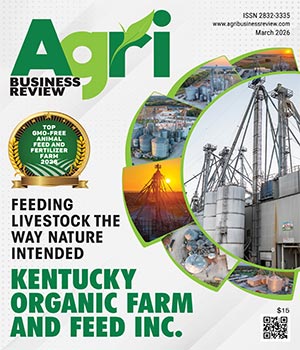
A few old barns, a tractor, a grinder mixer and a couple of bins; that was all a small group of dairy farmers in Todd County, Kentucky, had when they set out to feed their herds with clean, certified organic grain.
In a state with just two organic dairies and no mill to serve them, the odds of finding a reliable organic feed source were slim. But when no supplier could meet their standards, they turned determination into action and built their own small mill from scratch.
That act of resolve grew into
Kentucky Organic Farm and Feed Inc. (KOFFI), one of the most trusted names in certified organic feed and fertilizer, serving farms in 25 states.

From the outset, KOFFI operated entirely within the organic system, unlike conventional mills that run both organic and nonorganic lines side by side. No shared equipment or storage meant no cross-contamination and total traceability from the field to the feed bag.
“We produce feeds with clean grain, traceable sourcing and zero compromise on quality,” Melvin Troyer, CEO.
With every grain that passes through its mill, KOFFI carries forward the same spirit of shared learning that defined its earliest days. Long before there was a formal mill, each farmer mixed and bagged feed on their own farm, helping others alongside. One person kept the tractor running to power the auger and move the grain, while another tested the quality, filled bags and sealed them by hand. Every batch of grain produced brought a valuable lesson. They compared notes after each farm, fixing what didn’t work and refining what did, one farm at a time, until the process became second nature for them.
Those efforts built more than a stopgap; they built a movement. When production finally outgrew the original barns, the group bought a former fertilizer site in Guthrie across the road from the original mill, turning a local workaround into the foundation of Kentucky’s organic feed industry.
The Craft in Every Mix
“Feed-making is equal parts science and stewardship, says Gideon Beiler, sales manager. “Every mix that leaves our mill is responsible for the wellbeing of animals and the livelihoods of the people who raise them. That’s not a task we take lightly.”
That belief shows in how every system, from cleaning to storage, is designed to protect the quality of the grain. A licensed nutritionist designs feed for poultry, cattle, swine, goats and sheep, balancing protein levels and ingredients to suit each animal’s nutrition needs, the land they graze and the season they live in.
Success has always depended on the people behind the grain, because KOFFI was built by farmers for farmers, who understand both the science of feed and the strain of making it.
To maintain consistent quality, KOFFI invested in equipment that brings precision to every stage of the production process. A new grain cleaner and dryer, along with half a million bushels of storage capacity, allow the mill to manage harvests year-round and maintain quality from field to feed. Using them, the grain is dried to exact moisture levels, tested for mycotoxins and blended to achieve the desired nutritional level before any bag is filled. Every batch is tested before it moves forward, because control at the front and center is what guarantees performance at the finish.
The result is a traceable feed that performs consistently, a detail farmers notice when animal health and yield remain stable across seasons.
Attention to detail also gives KOFFI the freedom to adapt. Customers who want soy-free or corn-free blends receive alternatives built around peas, sunflower meal and small grains. And for farms that want feed tailored to their animals’ specific nutritional needs, KOFFI provides custom mixes. A minimum batch size of 2,000 pounds ensures even blending, yet the mill is structured to support both large commercial dairies and small homesteads.
Its fertilizer program follows the same rules, built on the idea that what nourishes the soil should meet the same ethical test as what nourishes livestock. KOFFI partners with suppliers such as Nature Safe, Fertrell, Crystal Creek and Terra Biotics to offer certified organic soil amendments and farm inputs that integrate cleanly into sustainable production systems.
What It Means to Be Truly Organic

It’s easy to blur the line between non-GMO and certified organic in the feed industry. Both sound like the right choice, but they are far from the same. Non-GMO feed excludes genetically modified ingredients while certified organic goes much deeper. It requires clean soil, verified seed sources, traceable supply chains and meticulous documentation from the field to the feed.
KOFFI has built its reputation by committing fully to that higher standard. While many mills choose the simpler route of producing non-GMO feed alongside organic lines, this mill operates exclusively within the organic system—a choice that assures KOFFI’s integrity at every step.
Every truck that arrives at its mill must present a clean-truck affidavit and a current organic certificate issued by the Kentucky Department of Agriculture or another accredited certifying body. Each load is tested for moisture content before it’s accepted. Grain that fails to meet the benchmark never makes it inside.
This level of diligence is about more than just following compliance. It’s about trust. Farmers know that what leaves KOFFI’s mill has met the same uncompromising standards as the grain that enters it.
A Circle of Trust
Success has always depended on the people behind the grain, because KOFFI was built by farmers for farmers, who understand both the science of feed and the strain of making it. That common background turns every customer conversation into a farmer-to-farmer exchange.
-
It’s easy to blur the line between non-GMO and certified organic in the feed industry. Both sound like the right choice.
When the mill first opened, there were only a few certified organic growers in the state of Kentucky. KOFFI began buying grain directly from the farmers it knew. Growers who had made the full transition to organic suddenly had a dependable buyer with constant demand and timely payment, allowing them to reinvest in their own operations. And those still farming conventionally had a local market waiting when they were ready to transition. As the network expanded and word spread, more farmers made that leap.
“They asked if we’d buy it, and we said certainly,” says Troyer. “Today, we’re well supported by farmers, and the trust runs both ways. It’s a symbiotic relationship that feels good that we’re in a business where we actually need each other.”
The mill even provides feedback on grain quality and performance, helping growers refine their crops for the next season. In return, those same farmers give KOFFI the stability it needs to plan production and maintain fair pricing. It’s a virtuous loop where good feed depends on good grain and good grain depends on farmers who can make a living growing it.
By sourcing regionally, KOFFI also keeps freight costs and fuel use low. Over time, that trust-based system strengthened both sides of the supply chain.
Its customers now range from small homesteads buying bagged feed to commercial dairies taking bulk deliveries, but all arrive through word of mouth. KOFFI operates like a neighbor who never stops showing up, running monthly delivery routes across several states and shipping pallets nationwide. At the mill, a small retail store serves walk-in customers from seven to four on weekdays.
Growth that Stays Grounded
KOFFI proves that scale and integrity can coexist. Its growth was never about getting bigger; it was about getting better. The new soy-free and soy-free-plus-corn-free lines are the latest examples of that philosophy being reflected in product form. Innovation, in this context, involves testing new grain combinations and monitoring their nutritional outcomes, rather than reinventing them. The founders refer to it as improving what they already do well.
Every ton of feed mixed at KOFFI represents grain grown within reach of Guthrie, keeping value in the local economy and providing small producers with a stable market close to home. Today, the tractors and grinder mixers are long gone, replaced by silos, dryers and conveyors; yet the heart of its operation remains unchanged. KOFFI still feeds animals the way those first farmers intended, and still builds its future on the same principles that built its beginning.
Evaluating GMO-Free Animal Feed and Fertilizer Farms Long-Term Supply Integrity
Executives responsible for sourcing GMO-free animal feed and organic fertilizer operate in a procurement environment shaped by traceability requirements, grain price volatility and rising expectations from retailers and end consumers. Organic livestock producers must substantiate that every input, from raw grain to finished ration, meets standards that extend well beyond the absence of genetic modification. Documentation discipline, inspection readiness and supplier transparency now weigh as heavily as price per ton.
The distinction between non-GMO and certified organic feed has become central to supply decisions. Certified organic production excludes synthetic fertilizers, chemical sprays and prohibited inputs across the entire agricultural chain. That standard introduces more verification, tighter sourcing controls and greater administrative oversight. Grain shipments must arrive with current organic certificates, trucks must meet cleanliness requirements and the mill itself must prevent any commingling with conventional product. Buyers who rely on organic claims in their own branding cannot tolerate gaps in this process.
Geographic access to a capable organic mill further influences purchasing strategy. In many regions, suppliers concentrate on high-volume poultry or single-species rations, limiting flexibility for diversified farms and specialty livestock operations. Producers that require bagged, tote and bulk formats, or that raise multiple species, benefit from working with a mill that can accommodate varying volumes and feed types. Breadth of service reduces the need to manage multiple vendors and simplifies compliance oversight.
Formulation adaptability has also gained importance. Market demand for no-soy and no-corn rations continues to grow, driven by shifting consumer preferences and producer differentiation strategies. A supplier that collaborates with a licensed nutritionist to develop custom blends enables livestock operations to align feed composition with herd health goals and marketing commitments. Ingredient substitution using peas, sunflower meal, wheat, barley or oats requires sourcing depth and disciplined production controls to maintain organic integrity.
Procurement stability remains a defining factor. Organic grain markets can be relatively thin, particularly in regions where certified acreage developed gradually. A mill that has cultivated reciprocal relationships with organic grain farmers contributes to supply continuity and strengthens the local production base. When growers and mill depend on each other for market access and volume, the supply chain becomes more predictable for downstream livestock producers.
Kentucky Organic Farm & Feed illustrates how these elements can converge within a single enterprise. Established in 2006 in Todd County, Kentucky, it emerged in response to the state’s first certified organic dairy farms, which required a dedicated organic feed source. It operates as a fully certified organic facility, purchasing grain only with valid organic certification and maintaining strict separation from non-organic inputs. All inbound shipments must meet documentation and cleanliness standards consistent with certified organic requirements.
Its production capability extends beyond a single species or format. It supplies feed in bag, tote and bulk forms and produces rations for a wide range of animals, including custom blends developed in partnership with a licensed nutritionist. The business has responded to increased demand for no-soy and no-corn formulations, incorporating alternative organic ingredients while preserving compliance.
For executives prioritizing certified organic integrity, nutritional flexibility and dependable regional supply, Kentucky Organic Farm & Feed presents a credible choice. Its exclusive focus on certified organic production, combined with custom milling capability and diversified product formats, aligns with livestock producers that require documented compliance and adaptable feed strategies. In markets where access to comprehensive organic feed services remains uneven, it stands as a disciplined and, strategically sound partner for sustained GMO-free feed and fertilizer.
...Read more