
Thank you for Subscribing to Agri Business Review Weekly Brief
A featured contribution from Leadership Perspectives, a curated forum for agribusiness leaders across the agricultural value chain, nominated by our subscribers and vetted by the Agri Business Review Editorial Board.

LIMONEIRA
Leading Agriculture Through Change and Opportunity
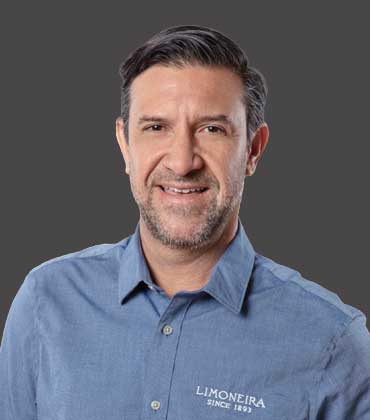
Edgar Gutierrez
Balancing Productivity with Precision
Changing weather patterns, labor needs and resources influence how we farm every day. As I often say, necessity is the mother of invention. The pressures facing agriculture are pushing us to adopt new technologies, make better decisions, and rethink what modern farming looks like.
Of the three, weather is without question the most unpredictable. Farming has always been cyclical, and historically we could rely on past patterns to guide many decisions. Today, however, we're experiencing more frequent heat waves, irregular rainfall, and greater weather volatility. As a result, we must be more agile and increasingly dependent on accurate, real-time information.
To support that approach, we've integrated on-site weather stations across our farms and use that information alongside soil moisture sensors, precision irrigation systems, dendrometers, and sap flow meters. These tools provide a clearer understanding of what's happening in the field and help us make more informed irrigation and water management decisions. Plants respond rapidly to changes in temperature, humidity, rainfall, solar radiation, and wind. Understanding those interactions and anticipating their impact is critical to reducing risk and maintaining consistent crop performance.
Labor is another major challenge, although it is far more predictable than weather. One question every grower should continually ask is, "How can I do this better than I did yesterday?" Agriculture is evolving rapidly, and standing still is not an option. We compete in a global marketplace where labor costs in the United States are significantly higher than in many competing production regions. That reality requires us to constantly improve efficiency and maximize the value of every labor hour.
Measurement plays a key role in that effort. Understanding the time required for individual tasks and identifying where resources are most needed allows us to allocate labor more effectively while maintaining crop quality and controlling costs.
At the same time, essential resources such as water, energy, and agricultural inputs continue to increase in cost. Because of that, precision is no longer simply a best practice; it's a necessity. We must understand exactly what the crop needs and apply resources accordingly.
Agriculture operates in an environment of constant change. That's why we're always evaluating technologies and tools that help us identify challenges sooner, improve decision-making, and adapt more quickly.
One of the most effective practices we've adopted in balancing productivity, resource efficiency and crop quality across farming is taking a block-by-block approach to understanding our farms. Every block has unique characteristics, opportunities, and limitations. By carefully evaluating those factors, we can determine where resources will generate the greatest return and develop targeted plans that maximize productivity and crop quality.
Too often, growers continue investing heavily in areas that face fundamental constraints, whether those limitations are related to genetics, soil conditions, topography, irrigation challenges, or other factors that are difficult to overcome. In many cases, applying additional inputs does not necessarily produce better outcomes. Data helps us make more informed decisions about where investments will have the greatest impact and where expectations need to be adjusted.
We're also placing greater emphasis on long-term soil health. Improving soil structure, increasing organic matter, and enhancing water-holding capacity create more resilient farming systems. Healthy soils help crops perform better under stress, improve resource efficiency, and can reduce reliance on certain inputs over time. In my experience, few investments provide a stronger long-term return than improving soil health.
The most successful operations find the right balance between technology, sound agronomic practices, and strong leadership. When those three elements work together, productivity improves, resources are used more efficiently, and crop quality remains consistently high.
When Technology Meets Human Judgment
I believe we're living through the most significant transformation in agriculture since the Green Revolution. Advances in artificial intelligence, automation, biotechnology, precision agriculture, and data analytics are changing the way we grow crops and manage farming operations.
Agriculture has always depended on experience, observation, and sound judgment, and that will never change. What is changing is our ability to make better decisions faster. Today, we have access to more information than ever before, allowing us to understand field conditions with a level of precision that was unimaginable only a few years ago.
In the years ahead, data will become an even larger part of daily farm management. Whether it's irrigation scheduling, nutrition programs, labor planning, pest management, or harvest timing, growers will increasingly rely on real-time information from sensors, weather stations, drones, and satellite imagery to make informed decisions and respond quickly to changing conditions.
That said, the best decisions will always come from combining data with the experience and intuition of growers, managers, and field teams. Farming remains a people business, and human judgment will continue to be indispensable.
The balance between technology and human judgment also shapes how I think about leadership. It's difficult to point to a single lesson because leadership in agriculture is built through experience. It comes from walking fields, working alongside crews, solving problems, making mistakes, and learning from them. It also comes from understanding both the operational and financial sides of the business.
I've learned that people trust leaders who understand the work and aren't afraid to get their boots dirty. When a team knows you've faced the same challenges they face, trust develops naturally.
Creating an environment where employees feel comfortable sharing ideas, asking questions, and trying new approaches is critical. Innovation only happens when people feel empowered to contribute.
Over time, I've come to realize that leadership is not about having all the answers. It's about building a team capable of finding solutions together. When people take ownership and feel empowered to make decisions, the entire organization becomes stronger.
Leadership is also about clearing the path for others to succeed. My role is to provide support, remove obstacles, and make sure everyone understands the vision and goals of the organization. When people feel connected to a common purpose, they can accomplish extraordinary things.
Finding Growth Beyond the Comfort Zone
Agriculture is more than a business; it's a way of life. The people who thrive in this industry are usually those who have a genuine passion for it, and that passion becomes the foundation for leadership.
One piece of advice I always give young professionals is to travel whenever possible. Seeing agriculture in different regions and countries broadens your perspective, challenges your assumptions, and often sparks new ideas that can be applied at home. Stay curious, keep asking questions, and never be afraid to challenge conventional thinking.
I also encourage people to embrace challenges, especially when they seem uncomfortable. Real growth often happens outside of your comfort zone. Every new challenge builds confidence, expands your capabilities, and teaches valuable lessons.
Finally, remember that leadership is about service. The most effective leaders invest in the success of others. They develop talent, create opportunities, and help people reach their full potential. If you focus on helping others grow while continuing to grow yourself, leadership opportunities will naturally follow.
Agriculture offers tremendous opportunities for those willing to work hard, remain adaptable, and maintain a longterm perspective. The future of our industry will depend on leaders who can combine technical expertise, strong people skills, and a commitment to continuous improvement.
The articles from these contributors are based on their personal expertise and viewpoints, and do not necessarily reflect the opinions of their employers or affiliated organizations.
