Thank you for Subscribing to Agri Business Review Weekly Brief


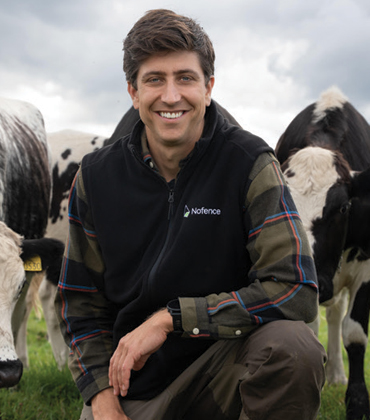 Joachim Kähler, CEO
Why is Nofence recognized among top Livestock Virtual Fencing Solutions providers?
Traditional fencing creates significant labor, maintenance and land-management challenges for livestock operations, especially across remote or uneven grazing terrain. Nofence develops GPS-based virtual fencing technology that allows livestock boundaries to be managed digitally instead of relying entirely on physical fencing infrastructure. Among Livestock Virtual Fencing Solutions providers, the company focuses on combining animal tracking, grazing control and mobile-based pasture management into one connected system. That flexibility helps farmers manage grazing movement with less dependence on permanent fence installation.
How does Nofence’s virtual fencing system work?
Nofence uses GPS-enabled collars that communicate virtual grazing boundaries through audio signals and corrective cues. Farmers can create or adjust grazing zones directly through a mobile application without physically relocating fencing materials. Its Livestock Virtual Fencing Solutions approach allows livestock movement to be controlled dynamically as pasture conditions change throughout the grazing season. That capability becomes especially valuable in rotational grazing systems and remote pasture environments where physical fence modification requires substantial labor and time.
What operational benefits does virtual fencing provide for livestock management?
Moving livestock between grazing areas traditionally requires fencing adjustments, labor coordination and repeated field access. Nofence supports more flexible grazing management by allowing digital boundary changes through remote controls rather than physical fence relocation. Its Livestock Virtual Fencing Solutions model helps reduce infrastructure maintenance while improving grazing utilization across available land areas. Farmers can also respond more quickly to pasture recovery needs, weather conditions and changing forage availability during the season.
How does Nofence support sustainable grazing practices?
Pasture overuse can reduce forage quality, increase soil stress and limit long-term grazing productivity. Nofence helps livestock producers manage rotational grazing more precisely by controlling animal movement through virtual pasture boundaries. Many Livestock Virtual Fencing Solutions providers focus primarily on containment, while Nofence places stronger emphasis on pasture utilization and grazing flexibility. That management approach can support healthier pasture recovery cycles and more balanced land use across grazing operations.
Why is GPS technology important in livestock virtual fencing?
Accurate boundary management depends heavily on location precision and reliable livestock tracking. Nofence integrates GPS technology into its virtual fencing system so farmers can monitor animal positioning and grazing activity in real time. Its Livestock Virtual Fencing Solutions capabilities also allow users to receive movement updates and adjust grazing zones without needing constant physical field supervision. That visibility becomes increasingly important for large grazing areas and remote livestock operations.
Why are Livestock Virtual Fencing Solutions becoming more important in agriculture?
Livestock producers continue facing pressure tied to labor efficiency, land management and sustainable grazing practices. Nofence addresses those challenges through virtual fencing systems designed to improve grazing flexibility while reducing physical infrastructure demands. Its role among Livestock Virtual Fencing Solutions providers reflects broader agricultural interest in digital livestock-management tools that support pasture efficiency, animal tracking and adaptable grazing control under modern farming conditions.
Management
Joachim Kähler, CEO
Description
Nofence, Europe’s leading virtual fencing innovator, empowers farmers with GPS-enabled collars that simplify grazing, improve animal welfare and support regenerative agriculture. With 150,000+ collars deployed, strong farmer feedback and $35M Series B funding, Nofence is scaling globally toward sustainable livestock management.
