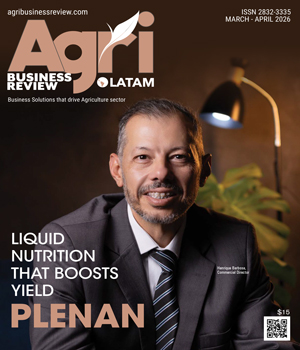
Agriculture has never been more advanced, with drip systems that self-correct, machines that steer themselves and seeds engineered for resilience. Yet plant nutrition remains a weak link in an otherwise high-tech farm.
Plenan closes this gap with high-purity liquid fertilisers designed for precise, trouble-free integration into today’s fertigation and automated injection systems. Field use indicates that low-salt index formulations with readily available nutrients support smoother system operation and more consistent nutrient delivery, helping growers boost productivity across fruits, vegetables, and flowers with greater precision.
“Customers stay with us because they see the results in the field and feel the difference in practice, and it is this consistency that sustains trust and brand loyalty,” says Henrique Barbosa, commercial director.
The Formula Designed for Modern Irrigation
The company’s distinction comes from its formulation science. Most liquid fertilisers on the market are simple dilutions of raw materials, often limited to a single nutrient, such as potassium, phosphorus or nitrogen. In field operations, this approach requires manual mixing, increases the risk of compatibility issues and interrupts fertigation when precipitation or clogging occurs. This slows down the process and creates more variability than control.
Plenan follows a different path. Its formulations are created through true chemical reactions, not simple blending. This provides each product with stability and a natural synergy between macro- and micronutrients, including nickel, which supports key metabolic processes. The controlled chemistry helps nutrients remain active for longer, limiting precipitation and unwanted reactions and improving plant uptake efficiency.
-
Customers stay with us because they see the results in the field and feel the difference in practice, and it is this consistency that sustains trust and brand loyalty.
A balanced relationship between cations and anions further supports nutrient availability, allowing irrigation water to deliver nutrients more effectively to the root zone.
“Our solutions are true formulations designed to simplify management, reduce operational costs and boost field productivity,” says Junior Basseto, planning director.
Field results clearly illustrate this impact. A citrus grower managing 44 hectares required 4 days of fertigation because the mineral salts required manual mixing and frequent unclogging. After adopting Plenan’s liquid formulations, the work was completed in a single day. The time gained carried through the season, and productivity increased by about 20 percent. Fruit uniformity also improved.
Growers report that this is not an isolated result. From tomatoes and strawberries to peppers, cucumbers and coffee, similar outcomes are being observed when nutrition is engineered to operate in step with modern irrigation systems.
Turning Harsh Conditions into Productive Fields
The science was developed to overcome the harsh agricultural conditions in Latin America that limit crop yields year after year. Water often shifts toward alkalinity, soils compact under salinity and microbiota weaken under constant stress. These changes reduce yield potential and disrupt the natural rhythm of the plant.
Plenan’s low salt index helps reduce salinity stress in the root zone, supporting soil recovery over time. Roots settle into a healthier environment, absorb nutrients more efficiently, and carry that strength throughout the plant. Growth becomes steadier, and quality becomes more uniform across the cycle.
Plenan treats environmental responsibility and resource optimisation as core principles that guide the development and use of its products. It supports distributors and producers with ongoing technical guidance, ensuring that every nutrient solution is used correctly for the crop and the irrigation setup.
Its teams invest heavily in technical training, practical workshops and regular field monitoring, helping to match dosage and nutrient solution volumes with real field conditions. This approach supports more efficient use of water and fertilisers, contributing to strong agronomic performance with reduced environmental impact.
Plenan views sustainability as the outcome of applied science, technical guidance and conscious management, shaping each step from product development to field application.
For the upcoming year, Plenan plans to introduce innovative formulations that further strengthen its commitment to sustainable, high-performance nutrition.
Disciplined Fertigation for Modern Crop Systems
Across large-scale and specialty agriculture, fertigation and liquid nutrient strategies have moved from efficiency enhancers to core drivers of crop consistency and input discipline. Executives responsible for selecting these solutions face a familiar tension: yields must rise while labor pressure, water constraints and soil fatigue intensify. In this environment, success depends less on novelty and more on whether nutrient delivery aligns cleanly with how crops absorb, soils behave and irrigation systems actually perform in the field.
What increasingly separates effective fertigation programs from disappointing ones is practical simplicity paired with chemical discipline. Liquid nutrition is often marketed as convenience, yet many products still rely on field-side mixing of single nutrients, introducing compatibility issues, application variability and time loss. The strongest approaches remove this burden by delivering complete formulations that arrive chemically stable, fully soluble and ready for controlled injection. When nutrients remain available without precipitating or antagonizing one another, managers gain predictability in scheduling and confidence in uptake across varying crops and substrates.
Another defining factor is how nutrient balance interacts with soil longevity and water quality. Salinity buildup, alkaline irrigation water and compacted soils are no longer edge cases in Latin American production systems. Fertigation programs that rely on high salt loads may offer short-term correction but often compromise soil condition and biological activity over time. Solutions designed with a low salt index and balanced ionic profiles support sustained use, allowing plants to express productive potential without accelerating degradation of soil structure or root environments. This steadier approach also supports fractioned application, matching plant demand rather than front-loading inputs.
Efficiency today is also measured by how well nutrition integrates with modern infrastructure. Automated irrigation, precision injection and sensor-driven scheduling are now common investments. Liquid nutrients that are chemically compatible with these systems reduce clogging risk, simplify calibration and shorten application windows. For executives overseeing multi-site operations, the operational implication is clear: fewer intervention points translate into lower labor exposure and more consistent execution across teams and regions.
Environmental accountability is no longer abstract in this decision set. Nutrient use efficiency and reduced losses through leaching or volatilization increasingly shape regulatory scrutiny and cost control. Fertigation programs that deliver gradual availability and stable absorption help limit excess chemical load in soil and water while maintaining crop performance. Just as important is the presence of technical guidance that ensures products are applied correctly, aligning dosage, timing and irrigation volumes to local conditions rather than generic schedules.
These dynamics frame why Plenan has gained traction in fertigation and liquid nutrient programs across diverse crops. Its formulations are developed as complete chemical solutions rather than diluted raw materials, preserving nutrient stability and compatibility from storage through application. The emphasis on balanced macro and micronutrient integration, including trace elements essential to plant metabolism, supports consistent physiological response without forcing aggressive dosing. A low salt index and attention to cation– anion balance allow sustained use even where water quality or soil conditions would challenge conventional products. In practice, this approach has reduced application time, simplified management and improved uniformity and output in field conditions ranging from citrus to intensive vegetable production.
For executives seeking a disciplined fertigation strategy that prioritizes consistency, integration and long-term field performance, Plenan represents a considered choice. Its focus on chemical integrity, ease of application and alignment with modern irrigation systems positions it as a reliable partner for organizations that value controlled nutrition over short-term fixes.
...Read more