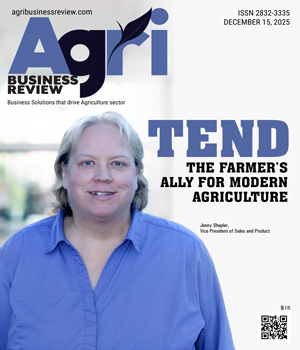
 Jenny Shepler, Vice President of Sales and Product
 For farmers, every day brings new challenges, from unpredictable weather and shifting markets to labor shortages and endless logistics. That’s why
Tend was built: to give growers practical, easy-to-use tools that simplify operations, save time, and support smarter, more sustainable farming.
For generations, farmers have managed their operations by instinct, scribbling notes in pocket notebooks, updating half-filled spreadsheets between harvests, and carrying mental checklists from sunrise to sunset. But as agriculture evolved, those methods began to strain under the weight of modern demands. With more records to keep, more rules to follow, and greater complexity to manage, there was rarely time left for what really mattered.
Tend was started on a small farm to change that.
Created for farmers, Tend launched in 2018 as a farmer-tested platform that brings every aspect of farm management into one place. For the first time, growers could plan crops, track tasks, manage inventory, and sell produce with ease —replacing scattered spreadsheets with a single, intuitive tool built specifically for diversified farms.
Before Tend, few modern, farmer-friendly tools existed to effectively manage the complexity of growing diverse crops. The available options were clunky, data-heavy, and made farming feel more like filling out paperwork than feeding people. In a world where every other industry had purpose-built software, farmers were left behind. Tend set out to change that with technology that works the way farmers do.
From the beginning, Tend embodied the spirit of the farm: practical, resilient, and rooted in real-world experience. It offered something long missing in agriculture: intuitive, supportive, and empowering tools designed to help farmers reclaim time, simplify decisions, and refocus on what matters most: growing nutrient-dense food and nurturing the land.

“As farmers, we know firsthand how complex and unpredictable farming can be. That’s why we built Tend to be powerful, intuitive, and adaptable from the start, a true partner in the field, helping farms of every size succeed,” says Jenny Shepler, Vice President of Sales and Product.
But that was only the beginning. In 2021, drawing on expertise spanning agriculture, data science, and software engineering, Tend’s team set out to reimagine what farm management could look like, whether a grower raises vegetables, cut flowers, or microgreens, or manages an orchard, vineyard, or greenhouse. After four years of rigorous development and global beta testing, the vision became reality. In 2024, Tend 2.0 launched: an even more powerful and user-friendly evolution of the original platform.
The All-in-One Platform for Farm Management
Tend is a unified platform that brings together crop planning, compliance, operations, sales, and profitability insights, all in one place. Farmers turn to Tend because it cuts through the noise, reduces administrative burdens, and provides the clarity and confidence needed to run their farms effectively. By consolidating everything into one solution, Tend eliminates the need to juggle spreadsheets or switch between multiple apps.
What makes Tend especially powerful is how it automates and connects information. The software generates data through customizable growing templates, so when one detail is updated, related information adjusts automatically across the system. This saves time and ensures accuracy without duplicating work.
Designed for flexibility, Tend adapts to the way each farm operates rather than forcing a single method. Farmers can create multiple templates for each crop, plan plantings based on yield goals, revenue targets, acreage, or plant counts, and rely on Tend to handle the calculations. Dynamic farm maps make it easy to manage current layouts while preparing for future configurations, and tools like the open-space calculator help maximize land use.
-
As farmers, we know firsthand how complex and unpredictable farming can be. That’s why we built Tend to be powerful, intuitive, and adaptable from the start, a true partner in the field, helping farms of every size succeed.
Beyond annual crops, the platform supports the full lifecycle of perennial plantings, tracking changing yields and recurring tasks year after year. Its integrated design also connects crop planning with inventory and sales, giving farmers real-time visibility into what they have available and where it can be sold. Shelf life and expiration tracking ensure that perishable products are managed efficiently, while sales quantities can be allocated across multiple channels with ease.
Tend also simplifies compliance by automatically recording the data needed for certifications such as organic. Every step, from seed to sale, is documented in one system, making it easier for farmers to meet regulatory requirements and provide customers with transparent proof of how their food was grown.
Efficiency and Sustainability, Proven in Practice
Across the globe, farms are seeing firsthand how Tend transforms complex operations into manageable, productive systems. One example is a small farm in Australia, spanning just over two acres, which supplies fresh produce to its own restaurant, farm stand, and cooking school. With limited land to work with, the farm needed a way to maximize every square inch while staying true to its commitment to soil health.
By adopting Tend as its central platform for crop planning, rotation management, task organization, and recordkeeping, the farm transformed how it worked every day. Instead of juggling spreadsheets and manual logs, the team could see patterns in their data, plan strategically, and make smarter, evidence-based decisions to foster sustainable growth while keeping operations efficient and organized.
Continuing the Journey to Smarter Agriculture
Building on its successes, the company continues to evolve its platform through the direct input and insights of its users, refined by real-world, on-the-ground experiences to meet the needs of modern growers. The company is committed to expanding its feature set to serve the diverse needs of its clients, from small urban farms to enterprise-level regenerative operations, making farm management smarter, easier, and more sustainable.
Supported by a team of more than 50 engineers and trusted by customers in over 40 countries, Tend is dedicated to equipping today’s farmers with the tools they need to harness technology effectively. The company’s mission is to continue building technology that empowers farms in their essential purpose: growing high quality food for a healthier world.
Tend isn’t just software. It’s a movement toward smarter, more sustainable farming. Learn more at tend.com.
Why Farms Are Rethinking Management Software
Farm work has always involved planning and recordkeeping, though the amount of information growers now handle is far greater than it used to be. A single operation may be tracking planting dates, labor schedules, inventory movement, harvest estimates, food safety records and customer orders all at once. Farms selling to restaurants, retailers and local markets deal with another layer of pressure because demand can shift quickly while produce remains highly perishable.
Many growers still piece these tasks together through spreadsheets and separate applications. One tool handles crop plans, another tracks orders and another stores compliance records. That setup often creates confusion during busy parts of the season. Information gets entered multiple times, reports stop matching and managers spend hours correcting numbers instead of focusing on production decisions. Problems become even more noticeable when farms expand into more sales channels or increase crop diversity.
Ease of use has become a bigger concern than software vendors sometimes realize. A lot of older farm systems were built around data collection rather than everyday usability. Growers frequently describe them as difficult to maintain and overly dependent on manual entry. Software that saves time tends to stand out quickly because farm managers already juggle enough administrative work away from the field. Platforms that connect records automatically and reduce duplicate entry are drawing stronger interest for that reason.
Growing methods also vary too much for rigid software structures to work well across every farm. Organic vegetable farms, greenhouse operations and regenerative growers rarely follow identical production models. Some platforms still rely on fixed templates that leave little room for adjustments once a season changes direction. Farms need the ability to modify layouts, planting schedules and production targets without rebuilding entire plans each time conditions shift. Smaller farms feel this pressure especially hard because limited acreage leaves less room for inefficient space use.
Financial visibility has become another sticking point. Rising input costs and uncertain labor availability have narrowed margins across many agricultural businesses. Growers want a clearer picture of what is planted, what is available for sale and how expected yields connect to revenue. When planning, inventory and sales exist in separate systems, that picture becomes harder to trust. Software that keeps those pieces connected helps managers react faster when harvest estimates change or market demand moves unexpectedly.
Compliance requirements have added more strain over time. Organic certification programs and retailer reporting standards now require extensive documentation throughout the growing cycle. Farms relying on paper records or scattered spreadsheets often face extra work during inspections and audits. Centralized systems reduce some of that burden by keeping production records, inventory information and sales activity tied together in one place.
Within this market, Tend has focused on combining major farm functions into a single platform instead of separating them across disconnected tools. Its software brings together crop planning, inventory tracking, sales coordination, profitability reporting and compliance management in one system built specifically for growers. The platform also reduces repetitive entry by linking updates across connected records. Tend supports flexible crop templates, changing farm layouts and perennial planting management, making it suitable for a wide range of farm structures. Its approach will likely appeal to growers looking for clearer visibility across the business without adding another layer of administrative work.
...Read more