Thank you for Subscribing to Agri Business Review Weekly Brief


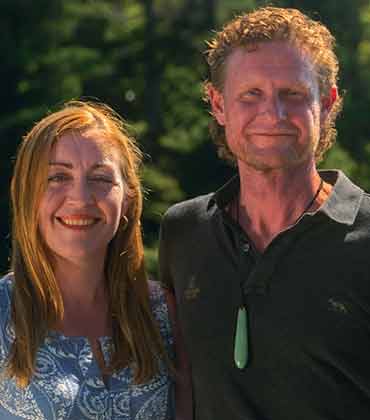 Simon Pooley, Director
Waimana Marine brings more than four decades of hands-on experience in New Zealand’s green-shell mussel industry, helping growers bring mussels through to harvest with strong retention and survival and in the right condition. Based in Elaine Bay, it devotes around 90 percent of its activity to contract work, supporting customers ranging from growers with a single mussel line to large companies operating multiple farms. Its teams can take on individual requirements or oversee the full production cycle, from sourcing and growing spat through seeding, reseeding, farm management and harvesting.
Waimana Marine also operates its own mussel farms, having recently reached an annual production target of 1,000 tonnes and is now working toward doubling that output.
“Being an owner-operator changes the mentality of the business. There’s a different approach to everything, with a higher level of care, responsibility and accountability,” says Simon Pooley, director.
Experience Shaped by the Industry
When Pooley’s parents entered the marine farming sector in the Marlborough Sounds in 1982, it was still a close-knit industry, with several families building businesses around the emerging practice of mussel farming. Rope culture was beginning to replace beach picking as growers explored more efficient ways to cultivate mussels. Waimana Marine has remained family-owned through that evolution.
Pooley grew up around the family operation, spending time on the boat with his father. He left school to join the crew full-time, eventually progressing to skipper before taking over Waimana Marine’s mussel-farming activities.
The industry has changed since those early years, with mechanization transforming the scale and equipment used in farming.
Waimana Marine now applies that experience across two marine environments. Elaine Bay remains its home base, while Golden Bay has become a second location. The sheltered waters of the Marlborough Sounds contrast with the exposed conditions of Golden Bay, requiring the business to operate with equipment and practices suited to each setting.
Operating from both locations also gives Waimana Marine greater flexibility. When weather restricts access to one area, conditions in the other may still allow work to continue, helping limit disruption to harvesting schedules.
Golden Bay became a permanent base after Art and Helen Blom, a Southland dairy-farming family approached Waimana Marine about developing a large area of water space. Developing the site required a vessel that could work in the open water conditions, so Waimana Marine built that capability around the project. It identified a partially completed vessel in Australia, brought it to New Zealand and worked with Smith Engineering Ltd to equip it for open water aquaculture.
-
Being an owner-operator changes the way you think about everything you do. There’s a higher level of care, responsibility and accountability that comes with it.
The 22-meter multipurpose aquaculture vessel was launched in November last year, enabling Waimana Marine to operate permanently in Golden Bay. It supported the installation of new culture lines, followed by mussel spat production to underpin an initial production target of 3,000 tonnes, with additional lines being established as the operation progresses. Across its Marlborough Sounds and Golden Bay operations, the expansion has increased annual harvesting capacity from 4,000 to 7,000 tonnes.
Building for the Future
Waimana Marine is a strong advocate for responsible marine farming, participating in the Marine Farm Association’s Environmental Certification Program and undertaking voluntary beach-cleaning work across the top of the South Island. Debris collected through these efforts is weighed, recorded and appropriately disposed of.
Its growing involvement in marine farm development is also shaping its next phase. Waimana Marine aims to become a first point of contact for growers and organizations looking to establish or expand marine-farming operations, extending the practical expertise it has built across cultivation, farm management and harvesting.
Its combination of operational capability, industry experience and expanding role in marine farm development has earned Waimana Marine the distinction of Top Shellfish Cultivation and Harvesting Services in APAC 2026.
Selecting Shellfish Cultivation and Harvesting Partners
Shellfish farming does not always run to a fixed timetable. Mussel growth and condition change with water temperature and food availability. Weather can limit vessel access, and local harvesting controls can temporarily take an area out of production. Processors and farm owners still need a reliable supply of marketable stock. This puts a lot of weight on timing. The crews need to understand the condition of the farm and be ready to act when the right window opens.
That judgment starts early in the farming cycle. Juvenile mussels may establish well but later suffer poor retention because of biofouling or oversettlement. Harvesting too early can leave the raw product in poor condition for the buyer. Waiting may produce a better crop, but it also brings the risk of bad weather or an area closure. Farm work and harvest timing, therefore, have to change with conditions. Tonnage tells only part of the story if survival drops or the crop misses the right processing window. This becomes even more important when the same contractor is involved from spat handling through later stages of the farming cycle.
Location adds another challenge. A farm concentrated around one bay can be difficult to service when the weather closes access or sanitary controls stop harvesting. Working across separate farming areas gives a contractor more room to move crews and vessels when one location is unavailable.
But the vessels also have to suit the conditions. Exposed sites are different from sheltered sounds. Distance affects transit time and crew planning, while biotoxin and sanitary monitoring can change which areas are open for harvesting at short notice. Local knowledge helps here. So does having crews and vessels based near different farming areas. When one location is constrained, work may be able to continue somewhere else instead of coming to a complete stop.
“Waimana Marine’s model spans spat production, farm management, reseeding and harvesting, allowing clients to use it for discrete jobs or broader farming programs.”
Not every grower needs the same level of support. One may need a vessel and crew for a single harvest or maintenance job. Another may want a contractor involved throughout the farming cycle. A flexible provider needs to be able to do both without pushing a client into services the farm does not need.
Speed of decision-making matters as well. Maintenance that is put off or a harvest that is delayed can eat into an already short biological window. Direct access to people who can commit vessels and crews can make a practical difference when conditions change quickly.
Waimana Marine provides this flexibility to mussel growers in New Zealand. The family-owned contractor operates across Elaine Bay and Golden Bay, giving it experience in both sheltered sounds and more exposed water. Its work spans spat production, farm management, reseeding and harvesting. Clients can bring Waimana Marine in for an individual job or use it across a broader farming program.
Its contract work ranges from specific farm tasks to long-term service agreements, with vessels suited to the environments in which it operates. For farm owners, that means support can change with the needs of the farm, while access to crews, vessels and experience across different farming areas helps keep the work moving when conditions change.
...Read more
Company
Waimana Marine
Management
Simon Pooley, Director
Description
Waimana Marine is a family-owned marine farming contractor based in New Zealand, specializing in mussel cultivation and harvesting. It supports growers across the production cycle, from spat production and farm management to reseeding and harvesting, while developing its own mussel-farming operations across diverse marine environments.
