Agri Business Review Magazine

GMO Free Animal Feed and Fertilizer Farm

GMO Free Animal Feed and Fertilizer Farms produce natural feed and organic fertilizer products without genetically modified ingredients or synthetic additives. These operations support sustainable agriculture, livestock nutrition, and soil health by providing environmentally responsible farming solutions that promote product transparency, natural cultivation practices, and growing consumer demand for GMO-free agricultural products.

Kentucky Organic Farm and Feed Inc.: Feeding Livestock the way Nature Intended
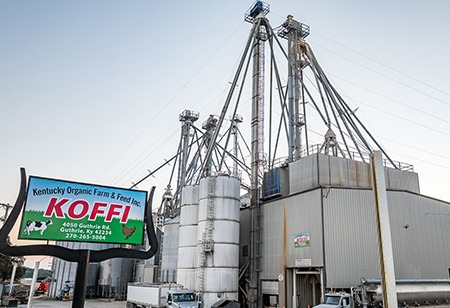
Kentucky Organic Farm and Feed Inc.
Kentucky Organic Farm and Feed Inc.: Feeding Livestock the way Nature Intended
Melvin Troyer, CEO, Gideon Beiler, Sales Manager
A few old barns, a tractor, a grinder mixer and a couple of bins; that was all a small group of dairy farmers in Todd County, Kentucky, had when they set out to feed their herds with clean, certified organic grain.

In a state with just two organic dairies and no mill to serve them, the odds of finding a reliable organic feed source were slim. But when no supplier could meet their standards, they turned determination into action and built their own small mill from scratch.

That act of resolve grew into Kentucky Organic Farm and Feed Inc. (KOFFI), one of the most trusted names in certified organic feed and fertilizer, serving farms in 25 states.

From the outset, KOFFI operated entirely within the organic system, unlike conventional mills that run both organic and nonorganic lines side by side. No shared equipment or storage meant no cross-contamination and total traceability from the field to the feed bag.

“We produce feeds with clean grain, traceable sourcing and zero compromise on quality,” Melvin Troyer, CEO.

With every grain that passes through its mill, KOFFI carries forward the same spirit of shared learning that defined its earliest days. Long before there was a formal mill, each farmer mixed and bagged feed on their own farm, helping others alongside. One person kept the tractor running to power the auger and move the grain, while another tested the quality, filled bags and sealed them by hand. Every batch of grain produced brought a valuable lesson. They compared notes after each farm, fixing what didn’t work and refining what did, one farm at a time, until the process became second nature for them.

Those efforts built more than a stopgap; they built a movement. When production finally outgrew the original barns, the group bought a former fertilizer site in Guthrie across the road from the original mill, turning a local workaround into the foundation of Kentucky’s organic feed industry.

The Craft in Every Mix

“Feed-making is equal parts science and stewardship, says Gideon Beiler, sales manager. “Every mix that leaves our mill is responsible for the wellbeing of animals and the livelihoods of the people who raise them. That’s not a task we take lightly.”

That belief shows in how every system, from cleaning to storage, is designed to protect the quality of the grain. A licensed nutritionist designs feed for poultry, cattle, swine, goats and sheep, balancing protein levels and ingredients to suit each animal’s nutrition needs, the land they graze and the season they live in.

Success has always depended on the people behind the grain, because KOFFI was built by farmers for farmers, who understand both the science of feed and the strain of making it.

To maintain consistent quality, KOFFI invested in equipment that brings precision to every stage of the production process. A new grain cleaner and dryer, along with half a million bushels of storage capacity, allow the mill to manage harvests year-round and maintain quality from field to feed. Using them, the grain is dried to exact moisture levels, tested for mycotoxins and blended to achieve the desired nutritional level before any bag is filled. Every batch is tested before it moves forward, because control at the front and center is what guarantees performance at the finish.

The result is a traceable feed that performs consistently, a detail farmers notice when animal health and yield remain stable across seasons.

The Strategic Imperative of GMO-Free Feed in Modern Agriculture

The agricultural industry is shifting towards GMO-free animal feed, prioritizing quality, transparency, and consumer trust, while also optimizing animal health and securing higher market value.

For decades, the agricultural industry operated under a paradigm where efficiency, yield maximization, and cost reduction were the sole determinants of success. However, a new era has emerged—one defined by quality, transparency, and holistic wellness. At the center of this transformation lies a critical, often overlooked component of the food supply chain: animal feed.

While the conversation regarding Genetically Modified Organisms (GMOs) has focused on direct human consumption—produce, snacks, and ingredients—the scrutiny has moved up the supply chain. Today, the feed given to livestock, poultry, and aquaculture is no longer viewed merely as an input; it is recognized as the foundational determinant of the final protein’s quality. The shift toward GMO-free feed is not a fleeting trend but a robust market evolution driven by an alignment of consumer values, biological optimization, and economic strategy.

The Consumer Mandate: Transparency and the Evolution of Trust

The most potent force accelerating the shift toward GMO-free feed is the profound change in consumer mindset. Today’s buyers are highly informed, digitally engaged, and increasingly wary of opaque production practices. They approach food with the principle of “secondary consumption,” recognizing that the quality of what they eat is directly influenced by the diet of the animals that produced it.

A key expression of this shift is the growing emphasis on the “clean label” ideal. Consumers are no longer satisfied with generic claims such as “natural”; instead, they scrutinize sourcing and production details. The preference for GMO-free feed aligns with a broader demand for simplicity, transparency, and minimal intervention. When purchasing premium meat or eggs, buyers expect a product that reflects purity throughout the entire value chain. If animals are raised on genetically engineered crops, that expectation is disrupted, diminishing the perceived integrity of the product.

Trust has consequently become a central currency in the food industry. Third-party verification of GMO-free practices offers an additional layer of assurance, demonstrating that producers adhere to strict segregation and testing requirements. In this context, Kentucky Organic Farm and Feed Inc provides GMO-free feed solutions that reinforce consumer expectations for purity and quality. This serves as a tangible signal that the producer values openness and is committed to meeting elevated consumer standards. GMO-free feed systems require detailed oversight, which supports consumer expectations for visibility into how their food is produced. This transparency reassures those who seek to avoid products associated with genetic modification or the introduction of foreign DNA sequences.

GMO-free feed also aligns with consumers' motivations, who associate genetically modified ingredients with potential allergen risks or uncertain long-term health effects. Even as scientific discussions continue, a segment of the market prioritizes precaution. Producers who adopt GMO-free practices align with this mindset, reinforcing their commitment to mitigating perceived risks and meeting evolving consumer expectations.

Biological Implications: Optimizing Animal Wellness and Performance

There is a growing body of industry observations and veterinary insights indicating that non-GMO feed offers notable advantages in livestock production systems. While much of the public conversation has traditionally emphasized marketing value, biological considerations related to animal health are increasingly influencing adoption. Producers and veterinarians alike are paying closer attention to how feed composition affects performance, well-being, and long-term herd vitality.

A central factor underlying the move toward non-GMO feed is its connection to herbicide exposure. Most genetically modified crops used for animal feed—particularly corn and soy—are engineered to withstand substantial applications of glyphosate-based herbicides. As a result, conventional feed rations often carry measurable residues of these compounds. Transitioning to non-GMO feed significantly reduces the herbicide load entering the animal system, a shift that industry observations suggest may support improved outcomes. Maintaining the integrity of the gut microbiome has become an important area of focus, as high herbicide exposure is believed to influence the balance of beneficial digestive bacteria essential for nutrient absorption. A reduced chemical intake also allows the immune system to operate without the added strain of processing environmental toxins, potentially enhancing resilience and overall health.

Producers who have adopted non-GMO feed frequently report improvements in animal behavior, condition, and performance. Traditional non-GMO hybrids are often selected for their nutritional value rather than traits related solely to pest or herbicide resistance, resulting in feed with a more favorable nutrient profile. This can contribute to stronger feed conversion efficiency and better utilization of dietary energy. Additionally, diets aligned more closely with an animal’s natural consumption patterns may help reduce sub-clinical inflammation, supporting higher activity levels, improved comfort, and greater vitality throughout the production cycle.

Economic Architecture: Leveraging Premium Positioning and Global Access

The consumer-driven and biological considerations establish the underlying motivation, but the economic framework provides the strategic rationale. Transitioning to GMO-free feed serves as a deliberate mechanism for de-commoditization. In an environment where standard protein prices are dictated by global bulk supply, GMO-free products enable producers to break away from commoditized pricing and position themselves within higher-value market segments.

The ability to command a premium is central to this shift. “GMO-Free” remains one of the few product attributes that reliably secures a retail price premium, and this added value extends throughout the supply chain. The segregation of non-GMO grains requires enhanced oversight and dedicated infrastructure, resulting in limited availability compared with conventional alternatives. Consumers who prioritize organic or non-GMO lifestyles also tend to exhibit lower price sensitivity, viewing the higher cost as an investment in health, ethics, and product integrity. For mid-sized producers, GMO-free feed functions as a competitive differentiator, reinforcing a brand identity that emphasizes quality over scale.

Global market access further strengthens the economic justification. While domestic demand plays a role, international markets strongly favor non-GMO production due to strict labeling regulations or prohibitions on specific GMO imports. By adopting GMO-free feed, producers automatically align with the most rigorous global standards, removing regulatory obstacles and enabling participation in high-value export channels that remain closed to conventional biotech-based producers. As global regulatory environments tighten and consumer preferences shift toward “clean eating” trends, establishing a GMO-free supply chain serves as a forward-looking strategy that mitigates future market risks and ensures long-term viability.

The trajectory of the animal feed industry is clear: the era of "don't ask, don't tell" regarding feed composition is ending. GMO-free feed has graduated from a niche requirement for organic farming to a mainstream differentiator for conventional production. By addressing the consumer’s demand for transparency, optimizing animal health through reduced chemical exposure, and securing premium economic positioning, GMO-free feed represents a convergence of ethics and economics. For the industry, this is not merely a change in ingredients; it is a strategic repositioning that prioritizes value, integrity, and long-term sustainability.

Evaluating GMO-Free Animal Feed and Fertilizer Farms Long-Term Supply Integrity

Executives responsible for sourcing GMO-free animal feed and organic fertilizer operate in a procurement environment shaped by traceability requirements, grain price volatility and rising expectations from retailers and end consumers. Organic livestock producers must substantiate that every input, from raw grain to finished ration, meets standards that extend well beyond the absence of genetic modification. Documentation discipline, inspection readiness and supplier transparency now weigh as heavily as price per ton.

The distinction between non-GMO and certified organic feed has become central to supply decisions. Certified organic production excludes synthetic fertilizers, chemical sprays and prohibited inputs across the entire agricultural chain. That standard introduces more verification, tighter sourcing controls and greater administrative oversight. Grain shipments must arrive with current organic certificates, trucks must meet cleanliness requirements and the mill itself must prevent any commingling with conventional product. Buyers who rely on organic claims in their own branding cannot tolerate gaps in this process.

Geographic access to a capable organic mill further influences purchasing strategy. In many regions, suppliers concentrate on high-volume poultry or single-species rations, limiting flexibility for diversified farms and specialty livestock operations. Producers that require bagged, tote and bulk formats, or that raise multiple species, benefit from working with a mill that can accommodate varying volumes and feed types. Breadth of service reduces the need to manage multiple vendors and simplifies compliance oversight.

Formulation adaptability has also gained importance. Market demand for no-soy and no-corn rations continues to grow, driven by shifting consumer preferences and producer differentiation strategies. A supplier that collaborates with a licensed nutritionist to develop custom blends enables livestock operations to align feed composition with herd health goals and marketing commitments. Ingredient substitution using peas, sunflower meal, wheat, barley or oats requires sourcing depth and disciplined production controls to maintain organic integrity.

Procurement stability remains a defining factor. Organic grain markets can be relatively thin, particularly in regions where certified acreage developed gradually. A mill that has cultivated reciprocal relationships with organic grain farmers contributes to supply continuity and strengthens the local production base. When growers and mill depend on each other for market access and volume, the supply chain becomes more predictable for downstream livestock producers.

Kentucky Organic Farm & Feed illustrates how these elements can converge within a single enterprise. Established in 2006 in Todd County, Kentucky, it emerged in response to the state’s first certified organic dairy farms, which required a dedicated organic feed source. It operates as a fully certified organic facility, purchasing grain only with valid organic certification and maintaining strict separation from non-organic inputs. All inbound shipments must meet documentation and cleanliness standards consistent with certified organic requirements.

Its production capability extends beyond a single species or format. It supplies feed in bag, tote and bulk forms and produces rations for a wide range of animals, including custom blends developed in partnership with a licensed nutritionist. The business has responded to increased demand for no-soy and no-corn formulations, incorporating alternative organic ingredients while preserving compliance.

For executives prioritizing certified organic integrity, nutritional flexibility and dependable regional supply, Kentucky Organic Farm & Feed presents a credible choice. Its exclusive focus on certified organic production, combined with custom milling capability and diversified product formats, aligns with livestock producers that require documented compliance and adaptable feed strategies. In markets where access to comprehensive organic feed services remains uneven, it stands as a disciplined and, strategically sound partner for sustained GMO-free feed and fertilizer.

Six Sigmas Impact on the Agriculture Industry
Corteva Agriscience [NYSE: CTVA]
Six Sigmas Impact on the Agriculture Industry
Robert King, Executive Vice President (& President), Crop Protection Business

How has Six Sigma enabled many agricultural operations to minimize the number of assets that remain unused?

Six Sigma methodology and philosophy can greatly improve the industry's overall efficiency and productivity. By following Six Sigma's principles of continuous improvement and innovation, agricultural operations can identify and eliminate process inefficiencies, reduce waste, and optimize resource allocation. This can result in increased asset utilization, ensuring that no asset is left inactive or under utilized. Additionally, Six Sigma promotes data-driven decision-making and the utilization of statistical instruments for process enhancement. This methodology can assist operations in analyzing and optimizing their asset management strategies, identifying areas where assets are not being utilized proficiently, and implementing corrective measures.

[QUOTE1_Replace]

Six Sigma contributes significantly to the success of the business by boosting productivity, enhancing efficiency, boosting quality, facilitating data-driven decision-making, and fostering continuous improvement. By implementing Six Sigma principles, agricultural organizations can streamline processes, reduce waste, and optimize resource utilization, resulting in increased service to the farmer. By implementing stringent quality control measures, they can ensure consistent and high-quality outputs, as well as meet regulatory requirements and ensure food safety. In addition, the philosophy of continuous improvement enables the business to adjust to shifting market demands and drive the adoption of sustainable practices.

How do you envision the future of the space?

There are three key areas where agriculture can help improve the world: reducing environmental impact by providing sustainable agriculture products and solutions for farmers, helping the farmer be more productive to produce more food, and creating innovative ways for farmers to provide more biofuel to serve a growing demand.  

Precision agriculture will be enabled by the integration of technical solutions such as drones and the use of and on-farm data coupled with advance data analytics. Using innovation to improve farming practices and farm yield is key to helping solve these issues. The application of Six Sigma principles to these technologies will increase productivity, decrease waste, and optimize the process as a whole. In addition, data analytics and artificial intelligence will play a significant role in the transformation of the industry by providing valuable insights from large quantities of data. Farmers can optimize crop yields and resource management based on informed decisions. Additionally, adopting more sustainable agricultural practices, such as the use of biological and natural products, will help alleviate social pressures and contribute to a more widely accepted method of crop treatment.

What advice would you give to someone interested in pursuing a career in agricultural operations?

The agricultural industry is distinctive and offers participants a rewarding experience. People in the industry have a shared social responsibility to provide food and fiber to the globe. This common goal creates a special affinity between agricultural industry workers. Individuals involved in agriculture, including employees, partners, and farmers, are motivated to enhance their productivity and contributions through their passion and commitment. If you possess a genuine interest in agriculture and its purpose,then joining the industry can provide fulfilling opportunities and allow you to have a meaningful impact on society.

GMO Free Animal Feed and Fertilizer Farm FAQ

Q1
What Do Top Organic Animal Feed and Fertilizer Companies Provide to Farms?
Top Organic Animal Feed and Fertilizer Companies supply livestock feed, soil nutrients and farm inputs designed to support organic and non-GMO agricultural practices. These businesses often provide feed for poultry, cattle, swine, goats, sheep and horses, along with organic fertilizers, soil amendments and mineral supplements. Many organic feed manufacturers also offer bulk delivery, custom feed blends and specialty formulations for farms with specific nutritional requirements. Demand for organic livestock products continues to influence feed purchasing decisions. Farmers increasingly look for suppliers that maintain traceable ingredient sourcing, certified organic handling practices and consistent nutritional standards. Organic fertilizer providers also help growers improve soil structure, nutrient availability and long-term soil health through natural inputs.
Q2
What Do GMO-Free Animal Feed and Fertilizer Farms Provide to Livestock Producers?
Top GMO-Free Animal Feed and Fertilizer Farms supply feed products and soil nutrition solutions designed for farms that want to avoid genetically modified ingredients and synthetic additives. These farms typically produce livestock feed for poultry, cattle, swine, goats and other animals while also offering organic or natural fertilizer products that support soil health. Many GMO-free feed providers also create custom feed blends, bulk delivery options and species-specific nutrition programs to help farmers maintain herd performance and product consistency.
Q3
What Products and Services Are Commonly Offered by GMO-Free Feed and Fertilizer Farms?
Farmers working with Top GMO-Free Animal Feed and Fertilizer Farms often have access to bagged feed, bulk grain, mineral supplements, custom rations and fertilizer products formulated for organic or regenerative farming systems. Some facilities also provide soy-free or corn-free feed options, delivery scheduling and nutritional consultation services. GMO-free animal feed companies may support both small family farms and larger agricultural operations that require traceability, ingredient transparency and dependable feed sourcing throughout the year.
Q4
Why Is Demand Growing for GMO-Free Animal Feed and Fertilizer Solutions?
Consumer interest in organic agriculture, clean-label food production and sustainable farming practices continues to influence purchasing decisions across the agricultural sector. Top GMO-Free Animal Feed and Fertilizer Farms are benefiting from demand among livestock producers that want better ingredient visibility and stronger alignment with organic certification standards. Growth in regenerative agriculture and specialty livestock markets has also increased interest in non-GMO feed solutions, particularly among farms focused on premium dairy, poultry and meat production. Even in regions where certified organic farming remains limited, producers increasingly value feed traceability and reduced exposure to synthetic inputs.
Q5
How Are Top GMO-Free Animal Feed and Fertilizer Farms Evaluated?
Selection criteria for Top GMO-Free Animal Feed and Fertilizer Farms often include ingredient sourcing standards, production consistency, storage practices and the ability to maintain separation from conventional agricultural inputs. Buyers also evaluate feed quality, nutritional formulation, delivery reliability and compliance with organic or non-GMO verification requirements. Farms that offer custom blending capabilities and transparent sourcing practices are often viewed more favorably because livestock nutrition directly affects animal health, productivity and long-term farm profitability.
Q6
What Value Do GMO-Free Feed and Fertilizer Providers Create for Farmers?
Many livestock producers work with Top GMO-Free Animal Feed and Fertilizer Farms to reduce contamination risks, improve feed consistency and support long-term soil management goals. Reliable non-GMO feed sourcing can help farms maintain certification compliance while minimizing supply disruptions that may affect production schedules or livestock performance. Fertilizer products developed for natural farming systems may also improve soil structure and nutrient balance over time. These outcomes can influence animal health, crop quality and operational stability across multiple growing seasons.
Q7
How Are Innovation and Nutrition Science Shaping This Category?
Modern Top GMO-Free Animal Feed and Fertilizer Farms increasingly rely on feed formulation expertise, ingredient testing and specialized milling systems to improve consistency and nutritional value. Many GMO-free livestock feed providers now develop species-specific blends that account for protein requirements, grazing conditions and changing feed costs. Technology also supports inventory management, quality tracking and delivery coordination. Farms that combine agricultural knowledge with nutrition science are often better positioned to support producers that require dependable feed performance and verified ingredient standards.