Thank you for Subscribing to Agri Business Review Weekly Brief
Agri Business Review: Specials Magazine
Why are agricultural residues often considered burdens rather than assets? In the everyday reality of farming, agricultural residues are often viewed as nothing more than a byproduct—a burden that farmers must manage after harvesting their crops. These residues, including leftover straw, stubble, bagasse, and other biomass, are often discarded, burned, or left to decompose. Despite their potential, these materials are frequently treated as waste, contributing little to a farmer’s bottom line. The lack of monetization of these biomass products represents a significant missed opportunity, especially in an industry focused on optimizing resources and maximizing profit. But Jagannadh Satyavolu, the visionary founder and CEO of BioProducts, LLC, recognized a different reality. Instead of waste, he saw untapped economic potential. BioProducts’ mission began with a simple yet profound insight: agricultural biomass—often discarded and neglected—could serve as a valuable economic driver for farmers. By unlocking the inherent value of this waste stream, BioProducts is working to change how farmers view and manage agricultural residues, transforming them from an environmental and financial burden into a valuable resource.

Sustainable Microalgae Solutions of the Year 2026
Did you know that up to 75% of microbes found in soil are dormant? Rising global demand, climate volatility, and decades of certain farming practices have strained the soil, reducing biological activity and long-term resilience. Many farmers face the challenge of sustaining yields in land that no longer recovers naturally, placing renewed focus on solutions that restore biological function in the soil. Many existing fixes, however, require them to alter established practices, add complexity or take on additional operational risk. With yield stability increasingly under pressure, PhycoTerra® operates within a different framework. Its microalgae-based solutions are designed to activate native and added microbial communities, improving nutrient efficiency, stress resilience, and long-term soil health while fitting into existing farming systems. By working at the soil biology level, PhycoTerra strengthens the foundation of fields without adding complexity to day-to-day operations. Soil microbes, specifically, bacteria and fungi, drive nutrient availability and water retention, making them essential to crop growth and development. Without the right food source, they can’t perform at their best. That’s why farmers feed their most valuable asset - microbes - with PhycoTerra. “At PhycoTerra, we strongly believe that scientific innovation only matters when it delivers measurable value for farmers in the field,” says Bennet Dixon, President and CEO.

Predictive Crop Intelligence Service of the Year 2026
In commercial potato production, critical decisions around contracting, labour planning and supply allocation are made months before harvest. These commitments are built on assumptions that early crop development will proceed on schedule and deliver expected yields. As acreage expands and weather becomes more volatile, relying on those assumptions with limited early-season insight introduces significant risk. Presia steps into this picture with a clear promise of certainty. The company delivers decision-grade intelligence on crop development, yield and tuber size early enough to predict outcomes. By combining satellite imagery, weather data and proprietary models into a continuously updated intelligence pipeline, Presia replaces intuition, fragmented scouting and late-season digs with a consistent, field-level view of performance and results. This allows growers and buyers to make decisions with intent rather than reaction. “We’re all about potatoes,” says Tyler Hennick, managing director. “That crop specificity is a big part of what makes us unique and a true reflection of what we do.” With expectations established earlier, teams can plan labour more accurately, direct field activity with purpose, meet supply commitments with confidence and manage operational risk as conditions evolve through the season.
Top Biostimulant and Fertilizer Supplier 2026
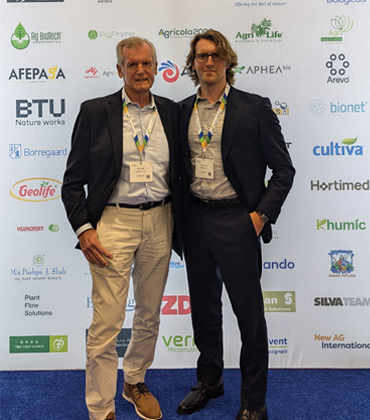
Why does nutrient efficiency increasingly depend on making every agricultural input count more? The future of nutrient efficiency and climate resilience will not be defined by adding more inputs, but by making every input count for more. Ag Biotech has built its operating model around that premise. Founded in 1992 as a regional agricultural retailer in upstate New York, the company worked directly with orchard producers and distributors and saw how cost, logistics and seasonal variability shaped what could realistically be used in the field. Many high-volume inputs fell short not because they lacked efficacy, but because they were difficult to transport, store and apply consistently. Those realities shaped a clear design principle. Crop inputs must deliver agronomic performance while remaining compact enough to move, store and apply efficiently across different farming environments. Today, Ag Biotech delivers ultra-concentrated biological crop inputs engineered to operate at a fraction of conventional application rates. The same formulations serve large commercial operations and smallholder farms in remote regions without reformulation. How do ultra-concentrated biological inputs improve nutrient efficiency while reducing fertilizer dependence? That approach is embodied in the company’s core portfolio, led by the biostimulant BioShot and the biofertilizer Bio Seed. Rather than relying on volume to offset stress, the formulations work through plant metabolism and soil microbiology, activating the pathways that govern how nutrients are converted into yield. In field trials, including rice trials in the Philippines, growers reduced synthetic nitrogen use by up to 25 percent while maintaining or improving yields.
CXO INSIGHTS

Lessons on Scaling a Regenerative Agriculture Programme
Anna Pierce, Director of Sustainability, Tate & Lyle

From Farm to Can: A Look at the Environmental Impact of Canned Fruits and Tomatoes
Cody Nore, National Sales Manager, Pacific Coast Producers

Six Sigmas Impact on the Agriculture Industry
Robert King, Executive Vice President (& President), Crop Protection Business, Corteva Agriscience [NYSE: CTVA]

Transforming Agriculture Through Measurable Sustainability
Jason Allerding, Global Head, Sustainability, Health, Safety and Risk Management, Syngenta Seeds

Driving Excellence in Wine Quality and Innovation
Riley Jones, Director, Quality & Tech Services, Treasury Wine Estates

Food Safety
Ron Burke, Sr. Director of Food Safety, Quality and Regulatory, Ardent Mills

Food Sustainability 101: Safety And Security
Adeniyi Odugbemi, Phd, Global Director, Quality And Food Safety, ADM


IN FOCUS
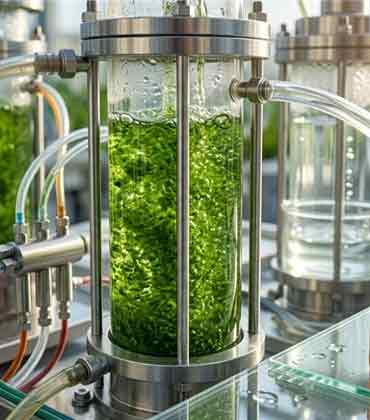
Eco-Friendly Biomass Solutions: Microalgae Driving Resource Efficiency
Sustainable microalgae solutions enable resource efficiency, circular production, environmental resilience, diversified applications, and scalable value creation across integrated biological and agricultural systems.

Agricultural Innovations: Profiting from Waste Management Solutions
Agricultural waste transforming services offer businesses sustainable solutions that reduce costs, enhance sustainability, and generate new revenue.
EDITORIAL
Harvesting Value: The New Era of Smart, Sustainable Agriculture
Agriculture is moving away from the traditional focus on maximizing yield, and is instead prioritizing how resources are used, conserved and replenished. In this edition of Agri Business Review, we explore innovative solutions that are redefining value in the industry. These solutions range from turning agricultural waste into new sources of income, to enhancing soil health and using data-driven insights to make smarter crop management decisions. Ultimately, these approaches are transforming operational challenges into tangible economic and environmental benefits.
At the center of this shift is BioProducts, recognized as the Top Agricultural Waste Transforming Service 2026. The company addresses one of agriculture’s most persistent inefficiencies: underutilized biomass. Through its proprietary xylose extraction technology, BioProducts efficiently converts agricultural residues into high-value outputs, including biofuels, biodegradable materials, and organic fertilizers. This approach eliminates waste-intensive practices such as open-field burning while creating new, sustainable revenue streams for farmers, positioning agricultural waste as a core economic and environmental asset.
This issue also recognizes PhycoTerra as Sustainable Microalgae Solutions of the Year 2026. Its model strengthens soil systems by activating native microbial communities, improving nutrient efficiency and resilience without adding operational complexity. With a focus on repeatable, field-level outcomes, PhycoTerra aligns biological innovation with practical farm integration.
Presia, awarded Predictive Crop Intelligence Service of the Year 2026, brings precision to decision-making through field-level intelligence. By integrating satellite data and predictive modeling directly into existing workflows, it enables earlier, more accurate interventions and reduces uncertainty across the growing cycle.
From a leadership standpoint, Anna Pierce, Director of Sustainability at Tate & Lyle, underscores the importance of data-driven supply chain collaboration in advancing regenerative agriculture. Complementing this, Riley Jones, Director of Quality & Technical Services at Treasury Wine Estates, highlights cross-functional execution and continuous improvement as critical to aligning sustainability with operational performance.
Agriculture is shifting toward systems that prioritize precision, integrate with existing operations and deliver measurable outcomes. The industry is moving beyond assumptions to data-driven decisions, where performance, resilience and long-term value creation are standard expectations rather than aspirations.
