
Thank you for Subscribing to Agri Business Review Weekly Brief
Agri Business Review: Specials Magazine
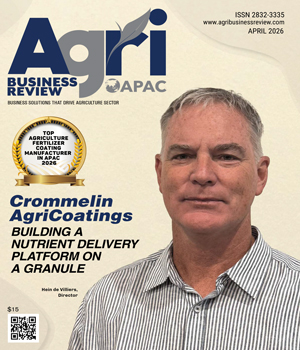
Why does modern agronomy require flexibility beyond traditional fixed fertilizer formulations? Global fertilizer supply operates within a highly structured system. Phosphate and nitrogen fertilizer granules are manufactured in large facilities, often in one part of the world, then shipped across oceans, unloaded at ports, stored in bulk and finally distributed inland to farms. The infrastructure is designed for scale, efficiency and reliability. Once those fertilizers leave the manufacturing plant, their composition is largely fixed. Modern agronomy, however, is not fixed. Soil conditions vary from region to region and even paddock to paddock. Crop rotations and seasonal rainfall change nutrient demand. Furthermore, agronomists increasingly recommend precise micronutrient additions—zinc, copper, manganese, magnesium or molybdenum, to name a few—tailored towards specific soil deficiencies. Yet the base fertilizer manufacturing system and supply chain cannot be reconfigured each season to meet those changing requirements. This creates a structural gap between how fertilizer is produced and how it is needed in the field. Crommelin AgriCoatings bridges the rigid global fertilizer supply system and the increasingly dynamic agronomic requirements by transforming traditional granular fertilizer coatings into nutrient delivery platforms. Rather than attempting to redesign fertilizer granulation or interrupt established logistics, Crommelin works within the existing supply chain, often at a fertilizer business’s point of distribution. Once fertilizer reaches the distribution stage, the coating becomes the final component applied before the product moves to the farm. “That coating can either be a simple protective film to suppress dust and reduce caking, or it can be engineered to carry additional value,” says Hein de Villiers, director. “We chose the latter.” By applying high-solids micronutrient coating formulations directly onto each granule during a blending process at distribution, Crommelin ensures every particle has both its base NPK content and the targeted micronutrient additions specified by agronomic advice. The underlying fertilizer properties remain unchanged as storage stability, flowability and handling characteristics are preserved. The change is that the nutrient profile becomes more precise. In this way, the coating shifts from a surface preservative to a delivery mechanism—introducing nutrient flexibility into a mature supply system without disrupting how growers store, transport or apply fertilizer.
Fertilizers and Nutrition
Rebuilding Soil Function Under Real Farming Stress Why did liquid fertilizers struggle under real farm conditions? Twenty-five years ago, Scott Hobson, Magnify NZ’s founder and Managing Director, watched a pattern repeat across solid, suspension and liquid fertilizer programs. Liquids could perform well, but only when on-farm conditions were close to perfect. Once weather variability, paddock compaction and everyday application realities entered the picture, results became inconsistent. Many farms returned to solid fertilizers and concluded that liquid fertilizers did not work. Magnify was built to close that credibility gap. Hobson’s premise was simple. Performance only counts when it holds under stress, across seasons and under normal farm management. Field repeatability, not a one-off result in ideal conditions, became the standard. “There is a big difference between controlled trial results and real-world delivery,” says Hobson. “If it cannot perform under stress and imperfect application, it will not hold on farms.” Magnify develops liquid bio-stimulants intended to rebuild soil function. Hobson frames it like a balance sheet. Farms build nutrient reserves over time, yet plants cannot reliably access them. Magnify aims to access that stored value, enabling farms to maintain yield stability without continual reliance on synthetic fertilizer..

Intelligent Aquaculture and Livestock Farming Equipment Manufacturer
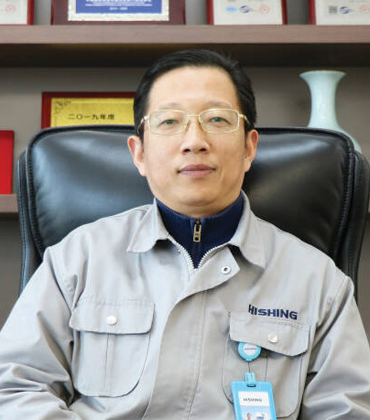
Technology integration is the key to driving sustainable growth in the agriculture and aquaculture industry. Hishing is a frontrunner in providing eco-friendly innovations with a range of turnkey solutions that optimize resource use, minimize environmental impact and maximize yield. Operating through three specialized subsidiaries—Qingdao Hishing Smart Equipment Co., Ltd., Qingdao Hishing Electronics Co. Ltd. and Haiyongxing (Dongying) Aquatic Products Co. Ltd.—the company serves distinct aquaculture and livestock farming needs, ensuring a comprehensive approach to agritech innovation. “We rely on our technological ingenuity and deep industry expertise to promote the advancement of aquaculture and livestock farming,” says Tao Yang, general manager. The Backbone for Modern Aquaculture Qingdao Hishing Smart Equipment Co. Ltd. focuses on designing and manufacturing recirculating aquaculture systems (RAS), an eco-friendly alternative to traditional fish farming methods. Its offerings include IoT-enabled fishery management platforms, industrial RAS and fully integrated farming solutions. With four invention patents, 95 utility model patents and 25 software copyrights, Hishing’s R&D strength underpins its leading position in China’s aquaculture equipment sector and an expanding global footprint. To address the growing need for modernization in livestock farming, Qingdao Hishing Smart Equipment Co. Ltd. has developed AI-powered egg counting equipment, environmental control modules and feed conveying systems. These tools have gained market traction by enabling precision farming and driving operational efficiency with real-time monitoring capabilities. For instance, its feeding system for chickens automates the management of 200,000 eggs daily with an error rate of less than 2 percent, significantly improving production efficiency. Unmatched Excellence in Electronic Automation Hishing’s mastery in automation is reinforced by Qingdao Hishing Electronics Co., Ltd. By designing and manufacturing best-in-class automation control systems, this subsidiary supports clients in the agriculture, medical and commercial equipment sectors. It strategically embeds intelligence and adaptability into all the products, ensuring operational stability, precise control and scalable integration. “Our expertise in electronic automation gives us a competitive advantage in advancing the aquaculture and poultry farming industries,” says Yang.
Fertilizers and Nutrition
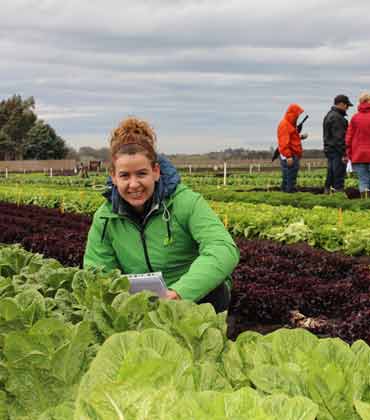
Securing our food future
Frances Tolson, Product Development Manager, Rijk Zwaan
Fertilizers and Nutrition

Organic Fertilizer and Precision Farming
Kantapat Jaruprompong, Manager, Farm System and Poultry Welfare, Tyson Foods
Livestock and Dairy

Driving Growth Through Innovative Strategies
Tom Marzella, Commercial Director - Oceania, Glanbia Nutritionals
Agri Biotech

Ensure That Palm Oil Products are Environmentally Friendly and Sustainable
Antoni Simamora, Environmental & Sustainability Senior Asst. Manager, First Resources Ltd.
Agricultural Product Distributor

Organic Food Production in Vietnam: Nurturing Sustainable Growth
Alberto Regini, Director of Operations, Dobla
Fertilizers and Nutrition

The Shift to Autonomous Maintenance in Manufacturing
Fauzi Baharin, Manufacturing Manager, Mondelez International
Fertilizers and Nutrition

Prioritizing Energy Regulation for a Sustainable Future
Ashley Hoover, Director of Sustainability, Aspire Bakeries

IN MY OPINION
Fertilizers and Nutrition
Driving Organizational Change and Empowering Leadership
Dr. Rachmat Setyawan, Corporate Division Head of People and Organization Development, PT. Gunanusa Eramandiri Tbk
LAST WORD
Agriculture Equipment
Why Increased Soil Carbon Is Helping To Unlock Benefits For Aussie Farmers And The Environment
Chris Stevens, Director, Global Agribusiness, Kellogg Company [NYSE: K]
IN FOCUS

APAC's Agricultural Shift: Liquid Bio-Stimulants as Strategic Tools
Digital technologies elevate liquid bio-stimulants into strategic, sustainability compliance, precision application, and scalable performance globally.
Driving Change in the APAC Fertilizer Coating Industry
APAC fertilizer coating competition centers on innovation, localization, sustainability, and partnerships as manufacturers balance efficiency, scale, and evolving agricultural demands.
EDITORIAL
Scaling Precision in Agriculture
As agriculture advances under increasing pressure to balance productivity, sustainability, and operational efficiency, the ability to adapt inputs to real-world conditions remains a defining advantage. In this issue of Agri Business Review APAC, we explore how fertilizer technologies and biological solutions are evolving to deliver precision without disrupting established farming systems.
Our cover story features Crommelin AgriCoatings, recognized as the Top Agriculture Fertilizer Coating Manufacturer in APAC 2026.. The company distinguishes itself by transforming conventional fertilizer coatings into nutrient-delivery platforms that seamlessly integrate into existing global supply chains. By applying high-solids micronutrient formulations at the distribution stage, the company achieves particle-level precision while preserving storage stability, handling efficiency, and throughput. Its disciplined approach to formulation ensures that innovation does not compromise operational reliability, enabling agronomic flexibility at scale.
Complementing this is Magnify, awarded Top Liquid Bio Stimulants Provider in APAC 2026, which brings a field-validated approach to restoring soil function. Built on decades of replicated trials under real farm conditions, Magnify focuses on improving nutrient accessibility rather than increasing input dependency. Its emphasis on performance under stress and long-term soil resilience reflects a shift toward biological systems that deliver consistent outcomes beyond controlled environments.
Adding further perspective, Dr. Rachmat Setyawan, Corporate Division Head of People and Organization Development, PT. Gunanusa Eramandiri Tbk highlights the importance of aligning organizational strategy with frontline execution. His focus on empowering operational leaders reinforces a broader industry truth that transformation succeeds when systems, people, and processes move in unison.
As agriculture continues to evolve, the convergence of precision engineering, biological intelligence, and organizational alignment will define the next phase of growth. We invite readers to explore the full issue and engage with the insights that are shaping the future of agricultural advancement.
