Thank you for Subscribing to Agri Business Review Weekly Brief
Agri Business Review: Specials Magazine
Robert King is the Executive Vice President of the Crop Protection Business Unit at Corteva Agriscience. His role involves overseeing the performance and profitability of the Crop Protection business unit. With extensive experience in the specialty chemicals and agriculture industries, Mr. King has successfully led teams in the U.S., Canada, China, and the U.K. He has a proven track record of improving operational capabilities and driving top- and bottom-line growth. Before joining Corteva, Mr. King served as Senior Vice President and Chief Integrated Supply Chain Officer at Nouryon, where he led the global and cross-business integration of the company's supply chain. He previously worked at PPG Industries as Vice President of Global Operations, Industrial Segment before joining Nouryon in 2020. How has Six Sigma enabled many agricultural operations to minimize the number of assets that remain unused? Six Sigma methodology and philosophy can greatly improve the industry's overall efficiency and productivity. By following Six Sigma's principles of continuous improvement and innovation, agricultural operations can identify and eliminate process inefficiencies, reduce waste, and optimize resource allocation. This can result in increased asset utilization, ensuring that no asset is left inactive or under utilized. Additionally, Six Sigma promotes data-driven decision-making and the utilization of statistical instruments for process enhancement. This methodology can assist operations in analyzing and optimizing their asset management strategies, identifying areas where assets are not being utilized proficiently, and implementing corrective measures. Six Sigma contributes significantly to the success of the business by boosting productivity, enhancing efficiency, boosting quality, facilitating data-driven decision-making, and fostering continuous improvement. By implementing Six Sigma principles, agricultural organizations can streamline processes, reduce waste,

Top Organic Based Lawn Care Service 2025
Every breakthrough begins with resistance. A lesson NaturaLawn of America’s Founder and President Philip Catron embraced early in his career. In the late 1970s, while working in the lawn care industry, he proposed a safer, organic-based alternative to chemical-heavy practices, and met rejection at every turn. At the time, the industry depended entirely on pesticides and synthetic fertilizers. The mindset was to use more chemicals to achieve greener lawns. But the results came at a cost. Pets were being poisoned, lawn care workers consistently fell ill and homeowners were told to stay off their grass after treatments. When the companies he worked for dismissed his calls for an organic-based alternative, he launched NaturaLawn of America, built on the belief that lawns could be both healthy and safe. Using a franchise model to expand its reach, the company has since grown into the nation’s leading organic-based lawn care provider and the third-largest lawn care company in the country. Catron adopted the idea of building soil health rather than masking problems with chemicals. He developed fertilizers enriched with more than 80 species of beneficial microbes and combined them with biological controls for weeds, insects and diseases. These microbes improved the soil itself, breaking down organic matter into nutrients, outcompeting harmful pathogens and activating the turf’s natural defenses, so lawns could thrive without the need for synthetic treatments at all. The impact is seen in customer experience. Across the industry, about half of clients typically call back with complaints or service requests after an application. At NaturaLawn, that number is less than three percent. Renewal rates tell the same story, averaging above 85 percent. Such results are possible because NaturaLawn rejects the industry’s one-size-fits-all chemical programs and builds its service model around customization. Each relationship begins with a soil test that examines composition, pH balance, nutrient levels, drainage and sunlight. From there, a tailored plan is created, applying the right mix of microbes and treatments to match the lawn’s specific needs.

Top Agricultural Machine Learning Software 2025

Farmers today enrich their soils by planting cover crops, reducing tillage and implementing diverse crop rotations. These practices also promise to generate income by storing carbon, which can be sold as credits. Recover Ag—an agricultural technology company—is making that promise practical with next-generation MMRV technology (Measuring, Monitoring, Reporting and Verification). Through initiatives such as the California Soil Restoration Project, farmers adopt practices that build carbon in their soils while Recover Ag manages the measurement behind the scenes. The company turns conservation into consistent profit by making soil carbon accounting accurate, scalable and affordable. So why has this been difficult until now? The barrier lies in how soil carbon accounting is currently managed. Most “carbon farming” projects use a “measure and model” accounting method. They measure using random selection of sampling locations, with limited coverage, often just one soil core every 20 to 40 acres. But random sampling does not account for the variation in soil carbon concentration throughout a field, which is related to factors like slope, cardinal direction, drainage and vegetation. Measurement of soil carbon through random, sparse sampling has very high levels of uncertainty. That uncertainty has prompted the registries that verify soil carbon projects to apply a large “uncertainty deduction” to the number of credits issued by a project. The deducted credits do not generate revenue for farmers or project operators. Current MMRV systems also rely on “process-based models” to generate predictions of soil carbon change without the high cost of soil sampling. Researchers have developed process-based models over the past few decades to simulate the behavior of a cropland ecosystem. They are very helpful for exploring research hypotheses, but they do not generate measurements that are accurate or precise enough for soil carbon credit accounting. Recover Ag is introducing several innovations to make the “measure and model” carbon accounting method accurate and precise enough to work for carbon credit issuance. Instead of random sampling, Recover Ag utilizes satellite imaging and other data to identify the zones in a field that are most likely to have variations in soil carbon levels. Recover Ag creates sampling plans that optimize coverage of the zone. The resulting samples are more representative and collected at a higher density, which increases the accuracy of the field-level measurements.
Top Sustainable Crop Production Solution 2025
More yields, bigger harvests.” This had been the unchallenged truth of agriculture for too long. Productivity came first, often at the expense of safety, sustainability, and transparency. Harmful chemicals quietly became the norm, and few raised any questions. Today, the old way of farming no longer suffices. It is time to break free from the status quo and embrace bold, new approaches. That is how modern technologies come to fruition, enabling healthier food production through environmentally responsible and sustainable practices. Recover Ag' rel='nofollow' target='_blank' style='color:blue !important'>ExcelAg is leading this transformation, driving a shift toward smarter, safer agriculture. It delivers real-world breakthroughs that matter thanks to its four core pillars: 1. Innovation 2. Technology 3. Healthy Food 4. Sustainability ExcelAg offers eco-friendly agricultural solutions focused on organic, sustainable products that boost productivity and enhance both crop and user safety. Above all, its work is grounded in safe practices that support long-term agricultural success and protect the environment for future generations.

Agricultural Product Distributor and Supplier

Adapting to Seasonal Changes: Chef-Driven Menus and Agriculture Supplier Offerings
Chef Chris Aquilino, Chief Culinary Officer, Elior North America
Agriculture Sustainability

The Case for More Variety in Agriculture and Diets
Christina Skonberg, Head of Sustainability & Mission, Simple Mills
Agri Biotech

Improving Public Health Through Agriculture
Colleen M. Zammer, Vice President of Varietal Solutions Growth & Corporate Innovation, Bay State Milling Company
Fertilizers and Nutrition

Enhanced Precision Agriculture using Cloud Based AI
Enrique Leon, AI Enterprise Architect, American Sugar Refining Inc
Agricultural Product Distributor
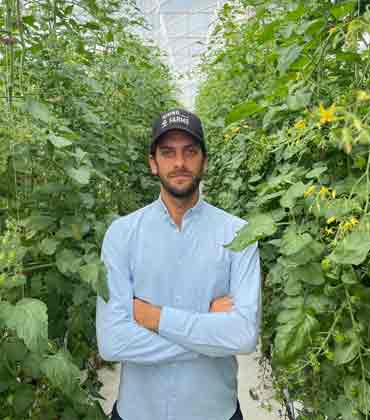
Agriculture: An Industry Desperate for Disruption
Mauricio Ricaud, Founder & CEO, Rising Farms

IN MY OPINION
Fertilizers and Nutrition
The New Frontier of Sustainability
Paul Bonnett, Senior Director of Agronomy & Environmental Sciences, Nutrien[NYSE: NTR]
LAST WORD
Crop Protection
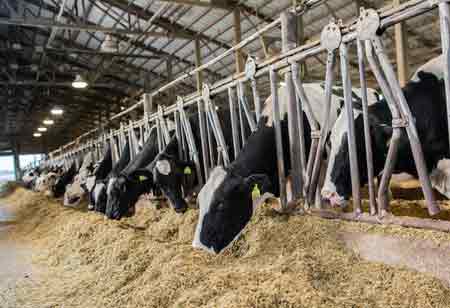
Empowering Animal Welfare Through Sound Science-Based Solutions
Karen Christensen, Senior Director of Animal Welfare, Tyson Foods
IN FOCUS

Building Resilient Lawns Through Organic Intelligence
The evolution of organic lawn care emphasizes ecological health through advanced soil science, innovative pest management, and sustainable practices for resilient turf ecosystems.
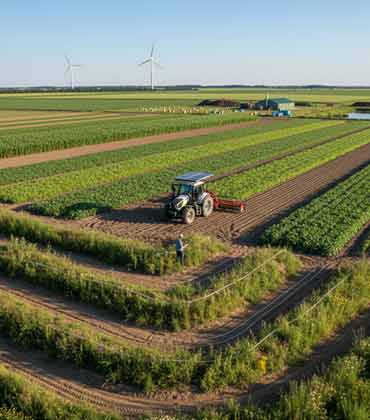
Carbon Farming and Verified Offsets: Monetizing Sustainability in Crop Production
Agriculture is evolving as a climate solution through carbon farming, enabling farmers to monetize sustainable practices and generate verified carbon offsets, linking ecological stewardship with economic opportunity.
EDITORIAL
Cultivation Made Tech-Driven
The agriculture industry is entering a new phase of intelligent, sustainable growth where automation and data converge to create smarter farming systems.
The focus is shifting toward predictive and prescriptive analytics that enable precision farming. AI models trained on satellite imagery, drone data and IoT sensor inputs are helping farmers forecast yields, detect crop diseases early and optimize irrigation and fertilizer use.
Organic-based lawn care is seeing a surge in bio-innovation and ecofriendly formulations. Companies are developing microbial soil enhancers and natural pest-control solutions that promote soil health without synthetic chemicals. AI and IoT tools are being used to measure soil composition and moisture in real time, enabling customized organic treatments that support greener, low-impact lawn ecosystems.
Robotics and smart greenhouses are revolutionizing cultivation in automated vegetable production. Autonomous harvesters, AI-driven vision systems and climate-controlled environments are enabling 24/7 operations with minimal human intervention.
Soil micronutrient analysis is being transformed by sensor fusion and portable lab technologies. Advanced spectroscopy tools and AI-based interpretation software now deliver real-time micronutrient readings directly from the field, replacing lengthy lab tests. Cloud-connected analytics dashboards allow farmers to tailor fertilization precisely, reducing waste and improving crop quality.
This edition of Agri Business Review highlights recent developments in agricultural machine-learning software, organic-based lawn care, automated vegetable production and soil micronutrient analysis. It offers insights into how farmers can adapt to these disruptive trends.
It features thought-leadership articles from industry experts, including Paul Bonnett, senior director of agronomy and environmental sciences (AES) at Nutrien[NYSE: NTR], who discusses strategies for sustainable agricultural practices. Karen Christensen, senior director of animal welfare at Tyson Foods[NYSE: TSN], shares insights into advancing animal welfare through sound, science-based solutions.
We hope this edition helps you build the partnerships your organization needs to sharpen its competitive edge in the industry.
