Thank you for Subscribing to Agri Business Review Weekly Brief
Agri Business Review: Specials Magazine
![CRESUD [BCBA: CRES]: Building Productive Scale across Farmland](https://www.agribusinessreviewapac.com/uploaded_images/731-qving.jpg "CRESUD [BCBA: CRES]: Building Productive Scale across Farmland")
CRESUD operates in Argentina, Brazil, Paraguay and Bolivia on an agricultural basis, enabling large agricultural properties to remain productive amid fluctuating market conditions. CRESUD's crop, livestock and sugarcane operations all participate under the same business plan, diversifying income sources and minimizing risk from concentration in a single product category. Sometimes a drought condition could negatively affect planting operations in one part of the world while livestock prices increase significantly, maintaining agriculture stable overall. Integrated Land and Production Management Origins trace back to 1936 when rural financing and land administration formed the basis of the business before agricultural production became the primary focus. Expansion developed gradually afterward through farming operations, cattle activities and farmland development across South America as demand for productive agricultural land continued to rise throughout the region. Under Alejandro Elsztain’s leadership, CRESUD expanded into one of Latin America’s largest agricultural companies, managing more than 850,000 hectares across diversified crop, sugarcane and cattle operations, while agricultural commercial services also operate through FyO. BrasilAgro later expanded regional operating depth across neighboring cultivation corridors. “We believe South America has a unique opportunity to play a leading role in global food production. For decades, we have focused on combining operational efficiency, technology and sustainable agricultural production, while also developing and enhancing the value of farmland assets across the region,” says Alejandro Elsztain, CEO of CRESUD. Running farmland at that scale requires coordination that goes beyond traditional farm management. CRESUD evaluates acquisition through a practical lens, including soil quality, access to water, drainage and long-term land productivity. Once the property enters the portfolio, the focus shifts toward maintaining reliable output through irrigation improvement, soil conditioning and coordinated field management designed to preserve consistency over time. CRESUD reduces commodity exposure by operating cereals, oilseeds and sugarcane alongside cattle activity, creating a more distributed production structure when drought conditions, export restrictions or currency instability begin affecting individual categories. A dry spell, changes in export rules or currency swings can hurt one part of the business, but not always all of it at the same time. Cattle can also help relieve stress during difficult planting years. With year-to-year fluctuations in crop returns in a given area, it would be a valuable asset to have a livestock element to add stability and cash flow.
![Cresud [BCBA: CRES]: Building Productive Scale Across Farmland](https://www.agribusinessreviewapac.com/newstransfer/upload/Agricultural_Inputs_Distribution_and_Sales_Services_Latam-occbc-.jpg "Cresud [BCBA: CRES]: Building Productive Scale Across Farmland")
Top Agricultural Inputs Distribution And Sales Services in Latin America 2026
What challenges arise when agricultural input decisions are treated as isolated transactions? In many agricultural operations, input decisions are treated as one-time transactions instead of being integrated into an ongoing production strategy. As field conditions evolve throughout the season, these static programs can fall out of alignment, limiting their effectiveness and affecting crop performance. Agrocomer operates as a technical partner throughout the production cycle, extending its role beyond input distribution into continuous field-level support and agronomic decision-making. Regular on-site evaluations, technical analysis and post-application follow-up help ensure that input strategies remain aligned with real crop conditions as they change over time. “For us, distribution does not end with product delivery. It extends into how those products perform in the field and how decisions evolve as conditions change,” says César Arancibia Muñoz, CEO. For producers, this translates into more precise input use, improved crop development and reduced risk. Agrocomer works across crop nutrition, biostimulation and crop protection, combining its portfolio with technical guidance tied directly to plant response. Field observations and agronomic analysis inform recommendations, enabling adjustments that keep programs aligned with crop development and environmental changes. Distribution functions as part of crop management rather than a separate commercial activity.

Top Cattle Breeding Solutions in Latin America 2026
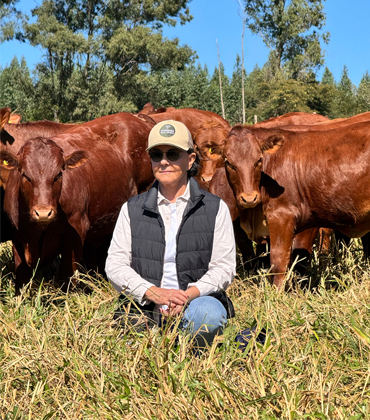
What factors limit crossbreeding adoption under field conditions in tropical cattle systems? For producers seeking superior beef quality, heavier calves and a shorter time to slaughter weight, crossbreeding is indispensable. Yet across much of Brazil, that objective becomes harder to realize when less heat-tolerant European breeds depend on Fixed-Time Artificial Insemination, with its added infrastructure demands, specialized labor and stricter reproductive control. Fazenda Santa Silvéria offers a more scalable route through Bonsmara cattle selected for natural mating, adaptability and docility, enabling clients to advance genetic improvement within pasture-based systems without moving into more intervention-heavy breeding models. Based in Pitatininga, São Paulo, the farm serves commercial cattle operations, breeders and vertically integrated beef businesses across Brazil, along with clients in Argentina, Paraguay, Costa Rica and Colombia. Some use Bonsmara bulls in crossbreeding programs to increase weaning weights, while others raise cattle for more exacting beef markets, including their own restaurant operations. “Our goal is the overall improvement of the Bonsmara breed, and we carry that principle through every stage of our breeding program,” says Clélia Brissac de Camargo Pacheco, CEO.
CXO INSIGHTS

Sustainable Livestock Farming: Technology And Innovation In Control Of The Chain
Tamara Lopes, Corporate Executive Sustainability Manager, Minerva Foods
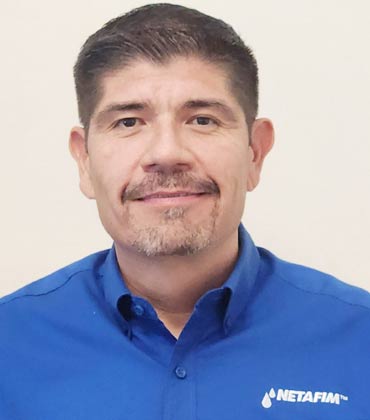
Precision Farming and its adoption challenges for Latin American countries
Oscar Gonzalez, Regional Director of Strategic Products and Crops LTAM, Netafim México

Sustainable Agriculture
Janaina Padoveze, Sustainability Manager and Thiago Jacob Miqueleto, Head of Marketing & Business Intelligence, Ajinomoto do Brasil [TYO: 2802]

Driving Innovation and Sustainability in Poultry Nutrition
Stacey Roberts, Ph.D., Senior Director of Nutrition, Versova

Climate Transition for Coffee Producers
Maria Camila Lopez Rojas, Director of Sustainability, Juan Valdez Cafe

IN FOCUS

Agricultural Inputs Distribution and Sales Services Market Outlook in Latin America
Agricultural input distributors enhance farm productivity through resilient supply chains, digital advisory services, sustainable product portfolios, and integrated financing support systems.
Cattle Breeding Solutions in Latin America: Advancing Livestock Productivity
Cattle breeding solutions in Latin America improve herd quality, productivity, sustainability, and efficiency through genetics, technology, and precision livestock management practices.
EDITORIAL
Strengthening Agriculture Through Execution
Latin America’s agricultural sector is evolving under growing pressure to improve productivity, strengthen supply resilience and adapt operations to changing environmental and market conditions. In this edition of Agri Business Review Latin America, we highlight organizations advancing agricultural performance through disciplined execution, technical expertise and scalable production strategies.
Our cover story, Cresud, recognized as the Top Agricultural Investment Company in Latin America 2026, has strengthened its position through large-scale agricultural asset development, operational diversification and long-term productivity management across Latin America. By aligning agricultural investment with efficient land utilization and sustainable production practices, the company continues to play an important role in shaping regional agribusiness growth.
This edition also features Agrocomer for Top Agricultural Inputs Distribution and Sales Services in Latin America 2026. The company has expanded the role of agricultural distribution through field-level technical guidance, agronomic validation and continuous crop monitoring that help producers improve input efficiency and maintain stronger crop performance under changing field conditions.
Fazenda Santa Silvéria, awarded Top Cattle Breeding Solutions 2026, continues to strengthen tropical beef production through Bonsmara cattle breeding programs focused on adaptability, fertility and feed efficiency. Its practical crossbreeding model enables producers to improve weaning weights, reduce finishing time and maintain consistent beef quality under pasture-based systems.
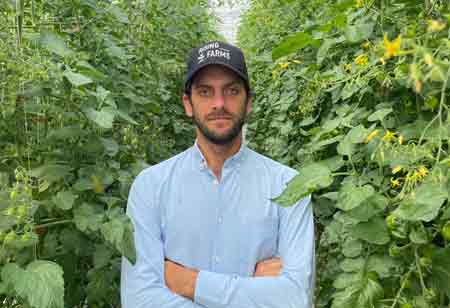
This issue also includes perspectives from Leandro Tonon, Corporate CIO at Pronaca, who explores how digital infrastructure, traceability and data-driven systems are improving operational visibility and sustainability across food and agribusiness supply chains. Mauricio Ricaud, CEO of Rising Farms, examines the structural challenges limiting grower profitability and the importance of stronger market alignment, reduced intermediary dependence and more sustainable agricultural economics.
Together, these organizations and industry leaders reflect a sector increasingly defined by operational resilience, technical precision and long term sustainability. We invite readers to explore the insights shaping the future of agribusiness across Latin America.
