Thank you for Subscribing to Agri Business Review Weekly Brief
Agri Business Review: Specials Magazine
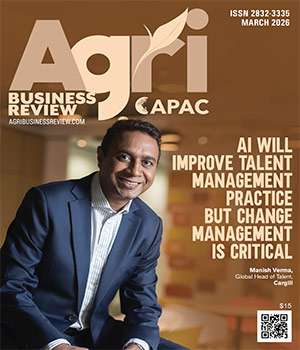
In the global economy, organizations compete with each other, mainly on the basis of talent in the organization. Talent management, therefore, becomes the top priority for the leaders of any organization. Leading human resource institutes defines talent management as the company’s ability to acquire, develop and retain high performing individuals to accomplish current and future business goals and implement strategic initiatives to improve the practices of talent management. In most organizations, Talent Management is broadly divided into three main stages of an employees’ lifecycle in an organization. The first stage is called talent acquisition, wherein organizations attract, identify, and recruit high potential individuals for open positions in the company, this stage also includes effective onboarding, which reduces time to be effective. The second stage is known as talent development, wherein organizations nurture and grow their employee skills for the current and future needs such as improving productivity, revenue, margins, markets share, and achieving a higher growth rate or, importantly, leadership succession. The final stage is talent retention, wherein organizations motivate high performers to stay engaged with the organization and, in turn, reduces talent attrition, thereby reducing the impact on organization performance. While these are broad stages in any organization, there are no one-size-fits-all guidelines for talent management, and different organizations deploy various practices, strategies for effective talent management. Technology-enabled talent management is one such strategy that, over the past decade, almost all human resource functions of the organizations are experimenting with. Many tools use Social networks, Mobility, Analytics, and Cloud technologies (also referred to as SMAC technologies), and Artificial Intelligence (AI) to advance and be effective. Technology-enabled Talent management is the key driver of change in curr
Livestock Feeder Equipment In APAC
For over 30 years, Technical Systems has established itself as the Market leader in feed conveying equipment for the livestock industry. Technical Systems is known for their durability, innovation and precision engineering. The company has built its global customer base in 58 countries by addressing evolving market demands for consistent stock availability, reduced lead times, durable products and dedicated technical support. This has been made possible through engineering excellence and a robust network of warehouses worldwide based in: South Africa, United States of America, China and Europe. “Our mission is to deliver durable products, minimize downtime and support our customers’ growth” says Bernie Joubert, Customer Relations Manager. An essential factor in fulfilling this mission is a focus on quality, starting with the use of premium steel. High-grade steel forms the foundation of its feeder components, from the Fatiqless™ Auger and feeder chain, to precision-engineered chain feeding drive and corner units. Technical Systems is known as the largest poultry feeder chain manufacturer. Their flagship product is feeder chain, a feed-conveying solution engineered for unmatched durability in high-volume livestock operations. It has earned its trust by delivering consistent performance, even under intense mechanical stress. Integrated seamlessly with chain feeding drive and corner units, it minimizes downtime and maximizes feed flow. Fatiqless™ Auger is protected by a global patent, this product is known for its success rate of 99.95 percent in feed conveying systems, making it a backbone in poultry and pig feeding systems. Every year, Technical Systems manufactures approximately 8 million meters of auger and over 10 million meters of feeder chain, dispatching 18 million meters of critical livestock feeding components globally. This massive output is backed by meticulous tracking through processes based on Technical Systems Internal Standards (TSIS). Seamlessly integrated with the company’s ERP systems, this ensures end-to-end traceability from raw material sourcing through production, logistics and final delivery to customers. A distinct serial number, enabling precise tracking and swift resolution of customer inquiries, is assigned to each product. An extensive data repository, retained for over 32 years, supports traceability and informs continuous improvement in existing products and the development of new, innovative solutions. Another distinctive advantage of Technical Systems is its OEM-centric engineering support. By working closely with OEMs and integrators, it provides expert guidance on installation, alignment, tensioning and performance tuning, customized for various farm layouts. .
Livestock Manure Fermentation Systems In APAC
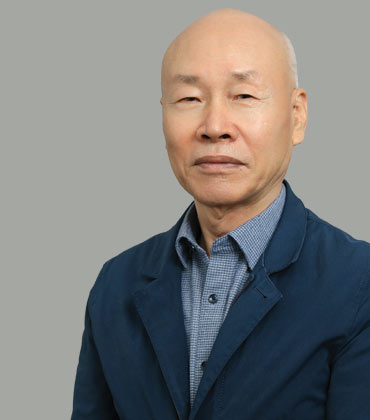
Transforming organic waste into a valuable resource is the next frontier in sustainable livestock farming. This shift is critical for pig, cattle and poultry farms to effectively manage the large quantities of manure produced daily. Sangil Tech Co. Ltd. turns what was once an environmental and logistical headache into a valuable resource with its Tower Compo composting system. Its vertical, enclosed, high-speed fermenter converts livestock manure into nutrient-rich compost, making the process simpler, faster and more cost-effective. Farms can enhance efficiency while reinforcing environmental responsibility. “Our product helps farms save time and money, making waste management more environmentally friendly,” says Sang-taek Jeong, CEO. No two farms are alike. They differ in moisture levels, manure composition and microbial activity. Sangil Tech’s system is designed to adapt to specific farm conditions through customization, serving diverse livestock operations and facilities like liquid fertilizer distribution centers, slaughterhouses and food processing plants. Irrespective of the environment, the system eliminates expensive and labor-intensive manure management practices and eases storage and disposal concerns. As the largest livestock environment machinery manufacturer in Korea, Sangil Tech has successfully installed over 1,000 composting systems in many countries including South Korea, Japan, Vietnam and India, with high satisfaction rates among customers. Its commitment extends beyond installation, offering tailored solutions, hands-on training and after-sales support to ensure maximum benefits to clients. Farms can expect a full return on investment—including product cost, installation and electricity within 3.5 years to 5 years, depending on the machine operation environment, moisture content, cost of electricity and compost selling price. Why Tower Compo? The Tower Compo is an eco-friendly, cost-effective solution that enhances efficiency while reinforcing environmental responsibility. The cost of waste disposal and treatment are rising, placing a significant financial strain on livestock farms. Prolonged manure storage also causes serious environmental and health risks. Unpleasant odor creates discomfort for farm workers and nearby communities, while the accumulation of toxic gases like ammonia and methane exacerbates carbon emissions. The risk of infectious diseases, such as bird flu and foot-and-mouth disease, can restrict the transport of manure offsite, further complicating waste management.
Environmentally Friendly Agricultural Products Development In APAC
Rolling Greens is transforming agriculture with innovative solutions that make farming both sustainable and profitable. By harnessing advanced microbial science, it helps farmers increase crop yields by as much as 30 percent while enhancing overall crop quality. Its proprietary microbial consortia restore soil health and strengthen plant resilience, reducing the dependence on chemical inputs and lowering greenhouse gas emissions. Unlike many biological inputs that remain unproven or inconsistent, Rolling Greens’ solutions are engineered for reliability and scale. They are compatible with a wide range of crops, including rice, banana, oil palm and vegetables, and integrate seamlessly with precision agriculture systems for efficient, targeted application. “Our mission is to transform agriculture with naturally intelligent solutions that deliver measurable results and lasting value,” says Brian Chen, CEO. At the core of this approach is a commitment to pairing global expertise with deep, local knowledge. Rolling Greens brings together experts in microbial biotechnology, agronomy, soil science and precision agriculture. This expertise is complemented by its partnerships with farmers, distributors, NGOs and universities in every market it serves. The result is a portfolio of biologicals that are validated through rigorous trials and adapted to local conditions in ways generic products often miss. From large-acre row crops to high-value specialty produce, farmers are equipped with the tools and know-how to achieve agronomic and economic success. Soil-Driven Innovation, Farm-Ready Solutions For decades, farming practices worldwide have relied heavily on chemical fertilizers and traditional inputs to increase yields. While effective in the short term, this model has created compounded challenges. Soil health has eroded, nutrient efficiency has declined and rising input costs continue to strain farmers. Rolling Greens addresses these challenges head on. Every engagement starts with a deep dive into the grower’s specific environment. This includes assessing a farm’s crop type, fertility practices, field history, climate patterns and soil variability. It directly engages with farmers to understand their specifics and identify gaps in nutrient programs. Recommendations are grounded in the farmer’s context rather than generalized assumptions.

CXO INSIGHTS
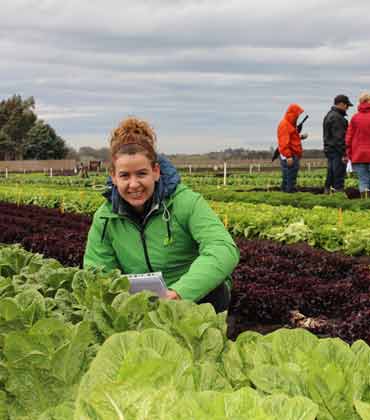
Securing our food future
Frances Tolson, Product Development Manager, Rijk Zwaan

The New Frontier of Sustainability
Paul Bonnett, Senior Director of Agronomy & Environmental Sciences, Nutrien[NYSE: NTR]

Insights on How to Navigate Modern Manufacturing Applications
Thiago Jube, Process Technology Manager, Barry Callebaut Group

Prioritizing Energy Regulation for a Sustainable Future
Ashley Hoover, Director of Sustainability, Aspire Bakeries
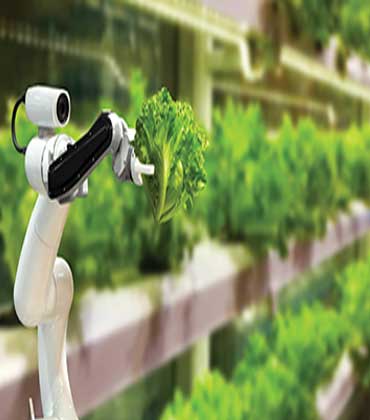
AgTech Revolution for Sustainability
Lowland Hum, a folk group from Charlottesville, VA


IN FOCUS

Unlocking the Benefits of Online Auctions for Agricultural Machinery
Online auctions are revolutionizing farmers' purchasing of agricultural machinery, offering benefits like selection, convenience, competitive pricing, transparency, flexible payment options, and supporting local businesses.

Driving Efficiency in Animal Agriculture: APAC's Feeder Equipment Boom
The APAC livestock industry is experiencing rapid growth due to increasing demand for animal protein, driving innovation in efficient and sustainable feeding equipment.
EDITORIAL
Building Resilient Agribusiness
Agriculture is moving into an era where resilience is measured by yield and system strength. Climate volatility, supply chain disruptions and rising input costs are compelling producers to reassess how operations are structured and sustained. This edition of Agribusiness Review APAC explores how infrastructure discipline, digital integration and governance are converging to support a more stable and performance driven agribusiness environment.
Technology adoption continues to accelerate across the value chain. Precision agriculture tools, connected equipment and analytics driven planning are enhancing visibility from field operations to distribution networks. However, innovation alone does not secure long term performance. Equal emphasis is being placed on reinforcing the operational backbone of farms and livestock enterprises. Advanced feed conveying components, engineered for durability and supported by structured quality standards, are reducing downtime and safeguarding output consistency. Integrated ERP systems and traceability protocols ensure that materials, production batches and logistics flows are monitored with clarity. Global warehousing models and continuous process refinement further strengthen reliability, enabling producers to scale with confidence.
As systems become more interconnected, risk exposure expands. Intellectual property protection, cybersecurity vigilance and disciplined data governance are emerging as strategic priorities. Without strong oversight, digital transformation can introduce vulnerabilities rather than efficiency. Aligning innovation with structured controls ensures that productivity gains are protected and that stakeholder trust is maintained.
Leadership perspectives in this issue reinforce this alignment. Kim Jessum, Chief IP Counsel U.S., Associate General Counsel and Secretary at Heraeus, emphasises proactive intellectual property safeguards within evolving operational models. Dennis Wan Bregt, Director of Data and Content Management at Kramp, calls for rigorous data governance, cautioning against both complacency and overconfidence in data maturity.
The path forward for agribusiness lies in integrated systems, durable engineering and accountable leadership. We invite readers to explore the insights in this edition and reflect on how resilient foundations can power sustainable growth across the agricultural value chain.
