Forage Seeds Development Services

Forage Seeds Development Services specializes in researching, breeding, and improving forage seed varieties used for livestock grazing, hay production, and pasture management. These providers support agricultural sustainability and animal nutrition by developing high-performance seed solutions that enhance forage quality, climate adaptability, soil health, and long-term productivity for livestock and farming operations.

VIRÖ Semillas: Turning Global Genetic Diversity into Competitive Forage Solutions
VIRÖ Semillas
Turning Global Genetic Diversity into Competitive Forage Solutions
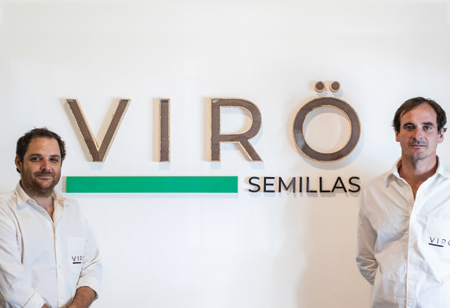
Fernando Rocha, Director, Miguel Viana, Director
VIRÖ Semillas operates with a clear philosophy: there is no single genetic source that is best for every environment. For this reason, the company continuously evaluates forage genetics from diverse origins around the world, selecting those that deliver the greatest value for each specific production situation.

Cultivating Opportunity: The Rise of Forage Seed Development in Latin America

In Latin America, forage seed development has emerged as a strategic economic and environmental driver, reshaping livestock productivity and market competitiveness across the region. Forage seed development in Latin America stands at a pivotal moment. Once a largely traditional sector, it is now rapidly modernizing under market demand, technology adoption, and climate pressures.

Advancing Reliable Forage Performance Through Global Genetics and Field Validation

Livestock and dairy enterprises depend on forage systems that perform consistently across seasons, soil types and management practices. Variability in rainfall, temperature swings, grazing intensity and soil constraints can quickly expose weaknesses in seed selection. For executives responsible for forage seed development partnerships, the central question is not genetic potential in isolation, but whether that potential translates into stable pasture performance under practical farm conditions.

Innovation as a key factor for Development of Specialty Products in Fish Aquaculture Rendering
Fiordo Austral
Innovation as a key factor for Development of Specialty Products in Fish Aquaculture Rendering
Christopher Holmes, Research and Development Manager

Due to the rising climate crisis, industries should strive to become as sustainable as commercially possible. Yet, reducing waste and reutilizing biomass is rather tricky, as it commonly steps away from the classical maximization of food output that industries have grown accustomed to in the last century. Rather, it involves taking a step forward and investing in interdisciplinary research, which involves actors from various areas such as production, quality control and supply chain management.

Forage Seeds Development Services Info

Q1
What Do Forage Seed Development Services Providers Support in Livestock Agriculture?
Pasture quality has a direct effect on livestock productivity, feed consistency and long-term grazing performance. Top Forage Seed Development Services Providers develop and evaluate forage seed varieties used in dairy, beef and mixed livestock systems. These services commonly involve genetic selection, field testing and seed adaptation programs designed for different climates, soil conditions and grazing practices. Forage seed research companies often work with agricultural producers, seed distributors and livestock operations focused on improving pasture reliability and feed efficiency.
Q2
What Services Are Commonly Included in Forage Seed Development?
Forage development programs typically extend beyond seed breeding alone. Top Forage Seed Development Services Providers may support variety testing, germination analysis, regional adaptation trials and pasture performance evaluation under real production conditions. Agricultural forage genetics companies also assist with disease resistance selection, stress tolerance assessment and seed multiplication planning tied to commercial distribution. In grazing-intensive systems, forage developers frequently evaluate persistence, seasonal growth patterns and nutritional quality across multiple harvest or grazing cycles.
Q3
Why Is Demand Growing for Advanced Forage Seed Development Services?
Livestock producers continue facing pressure tied to feed costs, climate variability and land-use efficiency. Top Forage Seed Development Services Providers are seeing stronger demand because producers want pasture systems that maintain stable forage production under changing environmental conditions. Growth in dairy production and interest in regenerative grazing practices have also increased demand for adaptable forage genetics. Many agricultural operations now prioritize pasture resilience and nutritional performance rather than relying only on high-volume forage production.
Q4
How Are Leading Forage Seed Development Services Providers Evaluated?
Field performance usually carries more weight than laboratory potential alone. Top Forage Seed Development Services Providers are commonly evaluated on seed establishment rates, persistence under grazing pressure and adaptability across different production environments. Forage seed technology providers may also be assessed on regional testing capabilities, seed availability and the quality of long-term agronomic support. Livestock producers often look for evidence that forage varieties can perform consistently under practical farm conditions rather than only in controlled research settings.
Q5
How Do Forage Seed Development Services Create Value for Livestock Producers?
Poor pasture performance can increase supplemental feed costs and reduce grazing efficiency throughout the production season. Top Forage Seed Development Services Providers help livestock operations improve forage consistency by supplying varieties adapted to local climate conditions, grazing systems and soil variability. Pasture seed development companies may also support longer grazing periods, stronger forage recovery and improved seasonal feed distribution. For dairy and beef operations managing large pasture systems, reliable forage establishment can influence both animal productivity and long-term land management costs.
Q6
What Role Do Genetics and Agronomic Expertise Play in Forage Seed Development?
Forage performance depends heavily on how plant genetics interact with real production environments. Top Forage Seed Development Services Providers increasingly use field analytics, genetic evaluation and regional performance testing to identify forage varieties suited for different agricultural systems. Agronomic expertise remains essential because grazing intensity, rainfall patterns and soil conditions can significantly influence pasture persistence and nutritional value. Development teams must also balance productivity with resilience since forage varieties that perform well in one environment may fail under different management conditions.